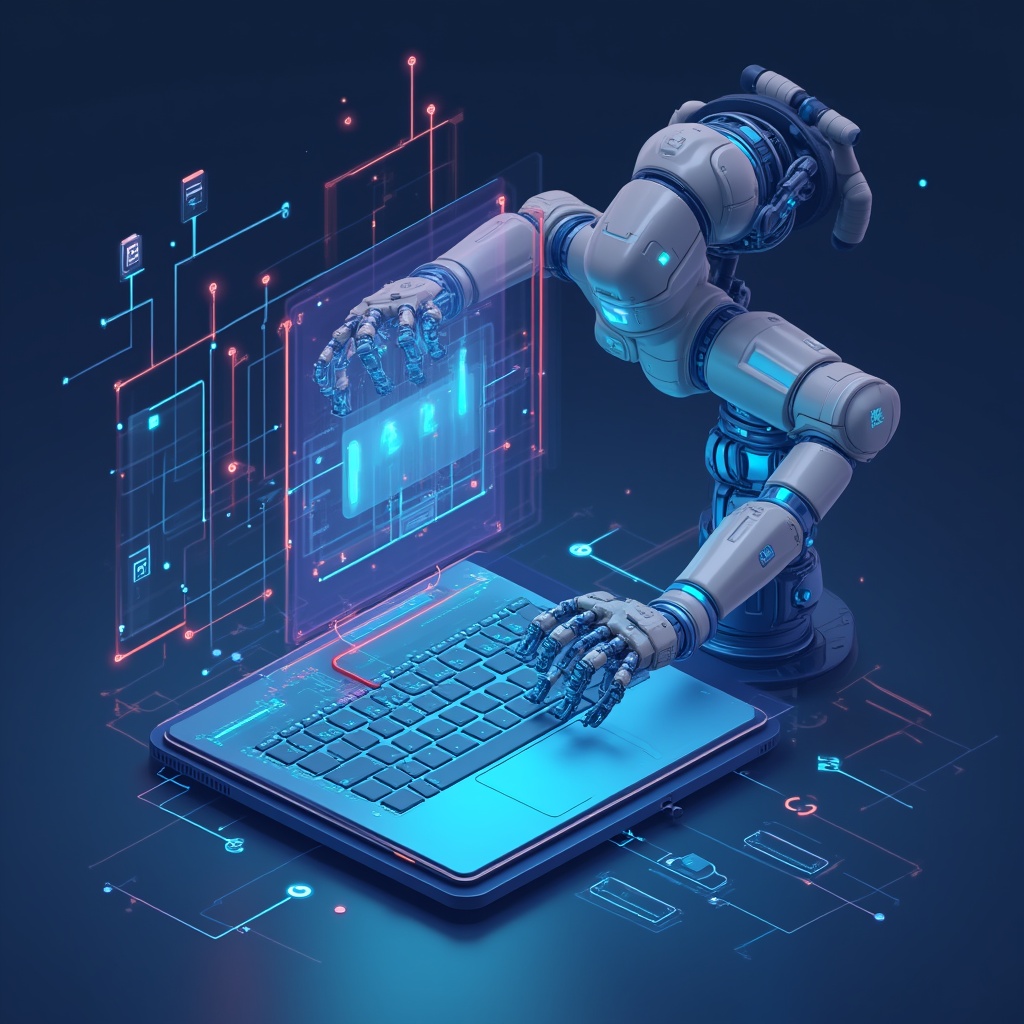

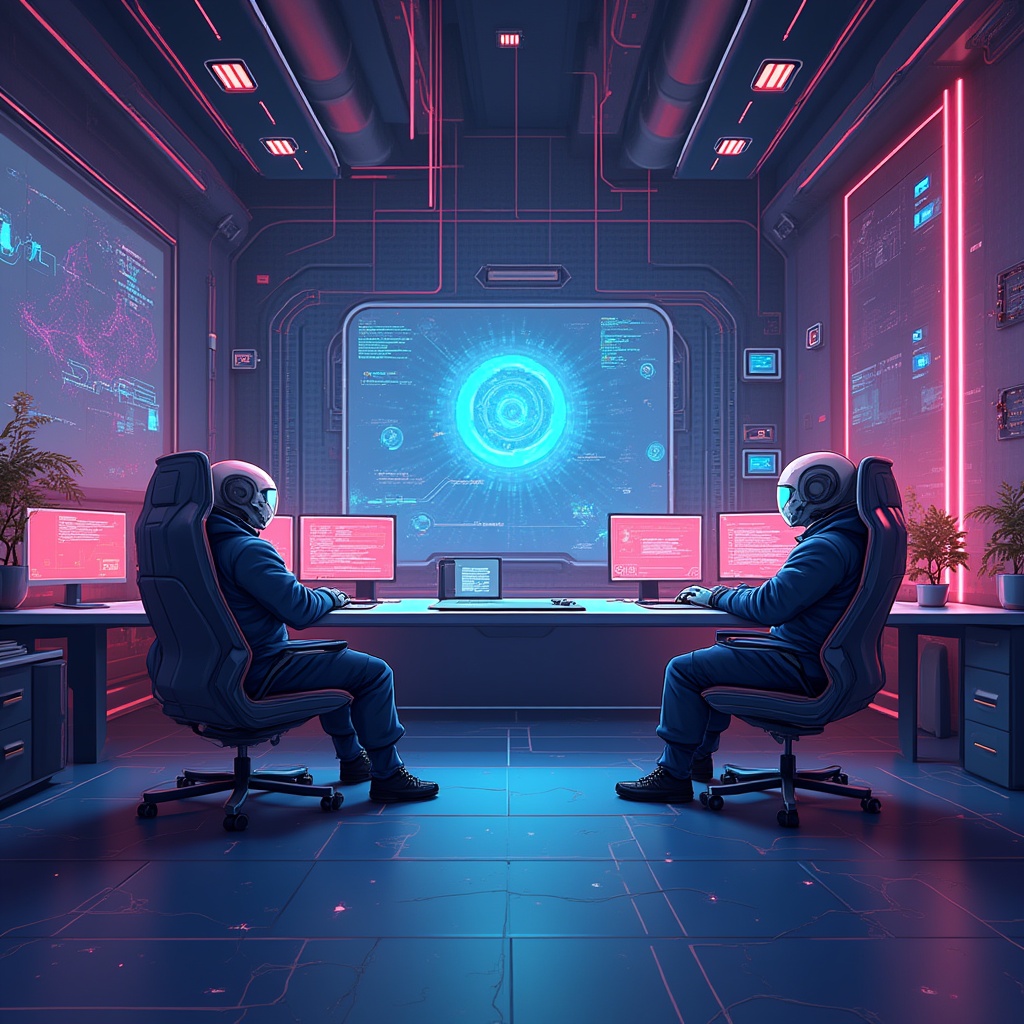
AI is revolutionizing game design by automating development processes, creating dynamic NPCs, generating content, and enabling procedural world-building. Today’s AI tools let anyone create games without coding skills, while sophisticated AI systems enhance player experiences through adaptive difficulty and personalized storytelling.
The Wild Frontier of Game Design AI: How Machines Are Making Gaming Magical
So I was trying to beat this boss in Elden Ring for the 47th time (not exaggerating), when it hit me — the way this monstrosity adapted to my tactics felt eerily… intelligent. Like it was learning from me. And you know what? It probably was.
That’s the magic of modern game design AI. It’s not just changing how games are made; it’s fundamentally transforming how we experience them. Remember when video game enemies just marched back and forth like clockwork? Those days are gone, my friends. Long gone.
The AI revolution in gaming is happening on two fascinating fronts: behind the scenes where games get made, and right in our faces as we play. Let’s break it down…
What Exactly Is Game Design AI?
Game Design AI refers to the application of artificial intelligence technologies in both creating and powering video games. It’s like having a super-smart assistant that can handle everything from generating terrain to making NPCs feel like real people with actual brains.
At its core, game design AI encompasses:
- Development tools that help create games (like automated level designers and content generators)
- In-game systems that power the behavior of characters, environments, and game mechanics
- Player experience technology that adapts difficulty, storytelling, and challenges to your specific play style
What’s truly mind-blowing is that these systems are getting smart enough that people with zero coding experience can now say “I wanna create own ai game” and actually do it. The barriers are crumbling faster than my willpower around chocolate cake.
The AI Revolution in Game Development
From Coding to Commanding
Traditional game development required teams of specialized programmers, artists, designers, and writers all slaving away for years. Now? AI tools are handling chunks of teh heavy lifting. Georgia Tech researchers have developed machine learning systems that can actually generate entire games based on simple prompts or parameters.
These aren’t just simple games either. We’re talking about systems that can:
- Generate complex 3D landscapes complete with textures and environmental features
- Create character models and animations without requiring manual rigging
- Write basic game logic and rules based on similar existing games
- Test games automatically by playing through countless scenarios
Democratizing Game Creation
The most revolutionary aspect? Regular people without computer science degrees can now make games. AI-powered tools like NVIDIA’s GameGAN, Unity’s ML-Agents, and various no-code platforms are putting game creation into everyone’s hands.
Learn more in
Website AI Maker: Build Your Next Site in Minutes
.
How AI is Changing the Gameplay Experience
NPCs With Actual Brains
Remember the days when non-player characters were basically fancy furniture with a few pre-recorded lines? Now they’re becoming disturbingly lifelike. Modern AI systems can:
- Give NPCs memories of your past interactions
- Allow characters to form opinions about your actions
- Create dialogue on the fly that responds to unique situations
- Develop relationships and social networks with other NPCs
Games like Red Dead Redemption 2 already implement primitive versions of these systems, but what’s coming next is gonna make those look like stick figures. We’re approaching NPCs that might pass a gaming version of the Turing test!
Adaptive Difficulty and Personalization
Ever played a game that was frustratingly hard or boringly easy? Modern AI systems are solving this through dynamic difficulty adjustment. These smart systems analyze your play style, skill level, and even emotional state (based on how you’re playing) to deliver the perfect challenge level.
Some games are even experimenting with personalized storytelling, where the narrative branches and evolves based on your specific choices and play patterns. It’s like having an invisible dungeon master customizing your adventure in real-time.
The Educational Path to Creating Game AI
If you’re fascinated by all this and want to get involved, there are actually structured ways to learn this stuff. Georgia Tech’s Online Master of Science in Computer Science (OMSCS) program offers specialized courses in Game AI and Video Game Design that are generating buzz among students.
Course Highlights
- Game AI Course: Teaches both fundamentals of game development and cutting-edge AI algorithms
- Video Game Design: Reportedly has manageable workload compared to other technical courses
- AI Specializations: Options including Computer Vision, Multi-Robot Systems, and AI Storytelling
Students apparently strategize about the optimal sequence for taking these courses, with many eager to “delve into game design coursework earlier” in their programs. Can’t blame ’em – who wouldn’t want to build the next generation of intelligent games?
Common Myths About AI in Game Design
Myth #1: “AI Will Replace Human Game Developers”
Not happening anytime soon. While AI is automating certain aspects of game creation, it’s more like giving artists and designers superpowers rather than taking their jobs. The most compelling games still need human creativity, emotional intelligence, and cultural understanding that AI simply doesn’t possess.
Myth #2: “AI-Generated Games Are Simple or Generic”
Early examples? Sure. But the technology is evolving ridiculously fast. AI systems like DeepSeek are “changing the AI landscape” with models that rival major tech companies. The sophisticated procedural generation we’re seeing now can create worlds and experiences with surprising depth and originality.
Myth #3: “Game AI Is Just About Making Enemies Smarter”
That’s just the tip of the iceberg. Game AI encompasses everything from procedural content generation to narrative development to player experience modeling. It’s reshaping every aspect of how games are made and experienced.
Real-World Examples of Game Design AI in Action
AI Dungeon
This text-based adventure game uses GPT models to generate virtually unlimited interactive storytelling. You can input literally anything, and the AI will craft a continuing narrative around your choices. It’s like having an infinitely patient dungeon master who never runs out of ideas.
NVIDIA GameGAN
This neural network can actually learn and recreate game engines by watching gameplay footage. In one famous example, it recreated a playable version of Pac-Man without any access to the underlying code—just by watching gameplay videos.
Procedural Generation in No Man’s Sky
While not “AI” in the strictest sense, the procedural generation systems in No Man’s Sky represent a stepping stone toward true AI-driven world creation. The game uses algorithms to generate over 18 quintillion planets, each with unique flora, fauna, and environments.
Learn more in
Website AI Maker: Build Your Next Site in Minutes
.
What’s Next for Game Design AI?
The horizon is simultaneously exciting and a little terrifying. We’re moving toward games that can:
- Generate infinite content that remains fresh and surprising
- Create emotional connections with characters who remember and evolve
- Adapt not just difficulty but entire worlds and stories to individual players
- Blur the line between designer and player by enabling anyone to create sophisticated gaming experiences
The really wild part? Many experts believe we’re still at the very beginning of this revolution. The games of 2030 might make today’s most advanced titles look as primitive as Pong does to us now.
As AI development shifts away from “a game of brute force—bigger models” toward more elegant and efficient approaches, we’ll likely see increasingly sophisticated AI tools become available to smaller studios and independent creators. The democratization of game development is just getting started.
Creating Your Own AI-Powered Game
Feeling inspired? Here’s the coolest part—you can actually start experimenting with game design AI today, even without technical expertise:
- No-code platforms like GDevelop and Construct offer AI-assisted development tools
- Unity’s ML-Agents provides a framework for training intelligent agents in game environments
- AI Dungeon allows you to create and share custom adventures powered by AI
- Roblox and Dreams both incorporate AI-assisted creation tools
The barrier to entry has never been lower. What would have required a team of programmers and artists just five years ago can now be accomplished by a single motivated creator with the right AI tools.
The Future Is Playable
Game design AI isn’t just changing games—it’s changing what games can be. We’re entering an era where games can understand us, adapt to us, and surprise us in ways previously impossible.
Whether you’re a player enjoying these new experiences or a creator looking to build them, the revolution is just beginning. The games of tomorrow won’t just be played; they’ll be collaborated on with increasingly intelligent partners.
So next time that boss in Elden Ring seems to be learning your tricks a little too well… it probably is. And that’s just the beginning of what’s possible when we invite AI into our play.