

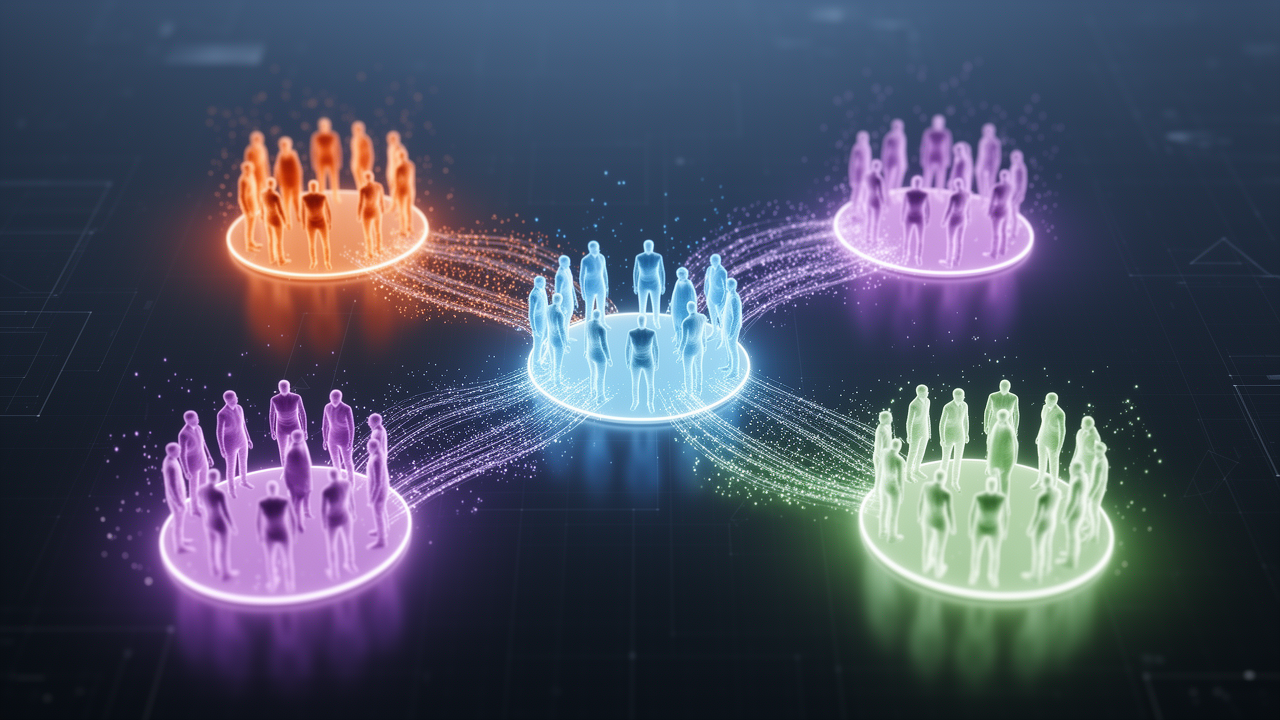
Customer segmentation models are systematic frameworks for dividing customers into distinct groups based on shared characteristics like demographics, behavior, psychographics, or geography—enabling businesses to personalize marketing, optimize resources, and improve customer experiences.
Picture this: you walk into your favorite coffee shop, and the barista remembers your order. Not because you’re the only customer—there’s a line out the door—but because you fit a pattern. You’re the “weekday morning oat milk latte with an extra shot” person. That’s segmentation in action, and it feels pretty good, doesn’t it?
Businesses face the same challenge at scale. They’re staring at thousands (or millions) of customers, trying to figure out who needs what, when, and how to deliver it without going broke or losing their minds. That’s where customer segmentation models come in—turning that overwhelming crowd into manageable, meaningful groups.
Let’s break down how these models work, why they matter so much in 2024, and how technology (especially AI) is changing the game for ecommerce brands.
What Are Customer Segmentation Models?
At the risk of stating the obvious, customer segmentation models are structured approaches to dividing your customer base into groups that share common traits. Think of them as sorting systems that help you see patterns in what looks like chaos.
The beauty of segmentation? It acknowledges a simple truth: your customers aren’t all the same, and treating them like they are is gonna cost you. Different groups want different things, respond to different messages, and have different lifetime values to your business.
Here’s what effective segmentation enables:
- Personalized marketing that actually resonates instead of getting ignored
- Resource optimization by focusing efforts where they’ll generate the best returns
- Product development insights based on what specific segments actually need
- Customer experience improvements tailored to different group preferences
The key word here is “actionable.” Academic segmentation that creates interesting groups but doesn’t change how you operate is just expensive entertainment.
Customer Segmentation Models: The Classic Frameworks
Before we dive into the fancy AI stuff, let’s cover the established approaches that still form the foundation of most segmentation strategies.
Demographic segmentation groups customers by measurable population characteristics. Age, gender, income, education, occupation—the stuff that’s relatively easy to collect and analyze. A luxury watch brand might focus on high-income professionals aged 35-55, while a budget smartphone company targets younger, cost-conscious consumers.
This model remains wildly popular because the data is accessible and the segments are straightforward to understand. But demographics alone tell an incomplete story about why people buy.
Behavioral segmentation looks at what customers actually do:
- Purchase history and frequency
- Product usage patterns
- Brand loyalty levels
- Response rates to previous campaigns
- Shopping cart abandonment behavior
This approach shines in ecommerce, where digital footprints create rich behavioral data. Someone who browses winter coats every October but only buys during Black Friday sales? That’s a segment.
Psychographic segmentation digs into the psychological attributes driving decisions. We’re talking values, beliefs, lifestyle choices, personality traits, and interests. This model helps explain why two people with identical demographics make completely different purchasing decisions.
A 32-year-old software engineer might buy organic groceries because of environmental values, while another with the same profile prioritizes convenience and cost. Same demographics, different psychographics, different marketing approaches needed.
Geographic segmentation divides customers by location—from broad regions down to specific neighborhoods. Climate affects product needs (winter coats sell differently in Minnesota versus Florida), and cultural preferences vary by region even within the same country.
The STP Framework: Turning Analysis Into Action
Creating segments is step one. Knowing what to do with them? That’s where the Segmentation, Targeting, Positioning (STP) framework earns its keep.
Segmentation comes first—you identify meaningful ways to divide your market using one or more of the models we just covered. But here’s where businesses often stumble: they create segments without thinking about the next two steps.
Targeting means deciding which segments deserve your focus. You can’t be everything to everyone (despite what your overly ambitious marketing intern insists). Which segments are large enough to matter? Which align with your capabilities? Which offer the best profit potential?
Positioning develops tailored strategies for serving your chosen segments. How will you differentiate your offering for each group? What messaging will resonate? Which channels will reach them most effectively?
Without this strategic framework, segmentation becomes an interesting spreadsheet exercise that never impacts business outcomes. The STP model bridges analysis and execution.
AI Customer Segmentation Ecommerce: The Modern Edge
Here’s where things get interesting. Traditional segmentation required humans to hypothesize segments, manually analyze data, and update periodically. AI customer segmentation ecommerce applications flip this script entirely.
Machine learning algorithms can identify customer groups based on complex combinations of characteristics that humans would never spot. They process mixed data types simultaneously—numerical variables like purchase amounts alongside categorical data like product preferences—without breaking a sweat.
How Machine Learning Changes the Game
Pattern recognition at scale: Algorithms analyze hundreds of variables across millions of customers, finding natural clusters that emerge from the data rather than relying on predetermined categories. Sometimes the most valuable segments are the ones you’d never think to look for.
Dynamic updating: Customer behavior shifts constantly. Manual segmentation gets outdated quickly, but machine learning models can refresh segments continuously as new data flows in. Your segments stay current without quarterly re-analysis projects.
Predictive power: Beyond describing current segments, AI models predict which customers are likely to churn, which are ready to upgrade, and which new visitors match your most valuable existing segments. This shifts strategy from reactive to proactive.
For ecommerce brands specifically, this matters because online shopping generates massive behavioral datasets. Every click, hover, cart addition, and abandonment creates signals that AI can process into actionable segments.
Recent research even explores using Large Language Models for consumer segmentation in marketing research, though these applications are still emerging. The field continues to absorb cutting-edge technology as it becomes practical.
Curious about putting these insights into practice? Check out Conversion Rate Optimization Strategies for Ecommerce Brands for tactical next steps.
Implementation: From Theory to Reality
Let’s pause for a sec and talk about actually doing this. Because the gap between “here’s a cool segmentation model” and “our business now operates differently” is where most initiatives die.
Data Requirements and Quality
Garbage in, garbage out applies mercilessly to segmentation. You need quality customer data across the dimensions you plan to segment by. If you want behavioral segments but your tracking is spotty, you’re building on sand.
Start with what you reliably capture. It’s better to segment well on three solid data points than poorly on ten questionable ones. Then expand your data collection strategically based on which additional signals would unlock better segmentation.
Tools range from basic statistical methods (perfectly fine for simple segmentation) to sophisticated machine learning platforms. Match your tools to your data volume, complexity, and business objectives—not to what sounds impressive in meetings.
Making Segments Actionable
This is the test every segmentation model must pass: does it enable different treatment strategies for each segment? If you create five customer groups but then market to all of them identically, what exactly was the point?
Actionable segmentation means:
- Marketing teams can craft different messages for each segment
- Product teams can prioritize features based on segment needs
- Customer service can adjust approaches based on segment characteristics
- Pricing or promotion strategies can vary by segment profitability
One practical challenge practitioners face: working with mixed data types when moving from supervised learning tasks to segmentation projects. You’ve got numerical variables (age, purchase frequency, average order value) and categorical variables (product preferences, channel preferences, geographic region) that don’t play nicely together in traditional statistical methods.
Modern machine learning approaches handle this more gracefully, but it remains a real-world complexity that textbooks often gloss over.
For a practical example of segmentation enabling targeted action, explore Abandoned Cart Automation: Email and Chatbot Strategy for Ecommerce.
Common Myths About Customer Segmentation
Myth 1: “More segments are always better.” Nope. Each segment you create adds operational complexity. Five well-defined, actionable segments beat fifteen overlapping, confusing ones. Focus on meaningful differences that justify different treatment strategies.
Myth 2: “Segmentation is a one-time project.” Markets evolve, customer preferences shift, and your business changes. Segmentation requires ongoing refinement. Set a review cadence—quarterly for fast-moving businesses, annually for more stable industries—and stick to it.
Myth 3: “AI segmentation will replace human judgment.” Machine learning excels at finding patterns in complex data, but humans still need to interpret results, assess business feasibility, and make strategic choices about which segments to target. It’s augmentation, not replacement.
Myth 4: “You must choose one segmentation model.” Actually, combining approaches often works best. You might start with behavioral segmentation to identify high-value customer groups, then layer in demographic or psychographic data to understand why those behaviors occur. Multi-dimensional segmentation provides richer insights.
Real-World Applications
Theory is great, but let’s talk about what this looks like in practice. An online clothing retailer might use behavioral segmentation to identify distinct shopping patterns:
The “Seasonal Shoppers” who browse frequently but only purchase during major sales events. Marketing focuses on early sale notifications and exclusive pre-sale access to reward their loyalty without training them to expect constant discounts.
The “Occasion Buyers” who purchase infrequently but spend significantly when they do—often around life events like weddings or job changes. Messaging emphasizes quality, special occasion appropriateness, and styling services rather than volume discounts.
The “Regular Refreshers” who make smaller purchases monthly to update their wardrobe. These customers respond well to new arrival highlights, style trend content, and loyalty programs that reward frequency.
Same product catalog, three completely different marketing approaches based on behavioral segments. That’s the power of customer segmentation models in action.
A subscription box company might combine demographic and psychographic segmentation. Young professionals value convenience and discovery but have limited budgets—they get a “curated essentials” positioning. Affluent retirees value quality and personalization over price—they get a “bespoke luxury” experience with the same underlying logistics system.
For additional tactics on converting different segments effectively, see Conversion Rate Optimization Tips That Increase Shopify Sales.
Technology Platforms and Resources
Modern businesses don’t build segmentation algorithms from scratch (usually). Cloud platforms and specialized tools have democratized access to sophisticated analytics that were previously available only to enterprises with data science teams.
Most major marketing automation platforms now include basic segmentation capabilities—enough for many small to medium businesses to get started without additional investment. These typically handle demographic and behavioral segmentation quite well.
As data volume and complexity grow, dedicated customer data platforms (CDPs) and analytics tools become worthwhile investments. They consolidate data from multiple sources, handle the messy data cleaning work, and provide more sophisticated segmentation options including machine learning approaches.
For businesses ready to leverage advanced techniques, open-source machine learning libraries offer powerful capabilities—but require technical expertise to implement effectively. The trade-off between accessibility and sophistication remains real.
If you’re curious about broader automation capabilities that complement segmentation strategies, this external resource provides additional context on integrating segmentation into marketing workflows.
Key Takeaways and Success Factors
Customer segmentation transforms abstract data into strategic intelligence that drives business decisions. While the core concept—dividing customers into meaningful groups—remains straightforward, execution ranges from simple demographic splits to sophisticated machine learning analyzing dozens of variables simultaneously.
Success factors include:
- Choosing the right model for your business objectives and available data rather than the most sophisticated option
- Ensuring segments are actionable—they must enable different treatment strategies, not just create interesting analytical groups
- Combining multiple approaches when appropriate (demographic + behavioral, for example) for richer insights
- Continuously refining segments as customer behavior and market conditions evolve
- Leveraging technology appropriately—from basic analytics tools to emerging AI capabilities—matched to your organizational capabilities
Whether you’re a small business starting with basic demographic segmentation or an enterprise deploying machine learning algorithms on massive datasets, the core principle remains: understanding customer diversity enables you to serve each group better than a one-size-fits-all approach ever could.
The businesses winning with customer segmentation models aren’t necessarily using teh most advanced technology—they’re the ones actually changing what they do based on segment insights. Analysis without action is just expensive curiosity.
What’s Next?
Once you’ve got solid customer segments identified, the natural next step is personalization at scale. How do you actually deliver different experiences to different segments across your website, email, ads, and customer service? That’s where marketing automation and AI-powered personalization tools come into play—but that’s a topic for another deep dive.
Another frontier worth exploring: predictive segmentation that identifies which segment new visitors or customers belong to based on their first few interactions, enabling personalized experiences from the very first touchpoint rather than after enough data accumulates for traditional segmentation.
Frequently Asked Questions
What are customer segmentation models?
Customer segmentation models are structured frameworks that divide customers into distinct groups based on shared characteristics like demographics, behaviors, psychographics, or geography, enabling personalized marketing and improved business outcomes.
What’s the difference between demographic and behavioral segmentation?
Demographic segmentation groups customers by measurable population characteristics (age, income, education), while behavioral segmentation focuses on actions like purchase history, product usage, and response to marketing campaigns.
How does AI improve customer segmentation for ecommerce?
AI algorithms can identify complex patterns across hundreds of variables, process mixed data types simultaneously, update segments continuously as behavior changes, and predict future customer actions—all at scales impossible for manual analysis.
What is the STP framework in segmentation?
STP stands for Segmentation, Targeting, and Positioning—a strategic framework that moves from dividing markets into segments, to selecting which segments to focus on, to developing tailored strategies for serving each chosen segment.
How many customer segments should a business have?
There’s no universal answer—the right number balances meaningful differentiation against operational complexity. Most businesses find that three to seven well-defined segments provide actionable insights without overwhelming execution capabilities.