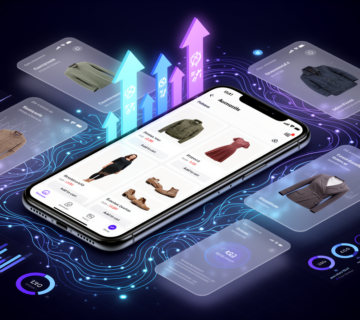


AI application in ecommerce includes personalized shopping experiences, intelligent chatbots, dynamic pricing, automated inventory management, and predictive analytics—all powered by machine learning and natural language processing to improve customer satisfaction and operational efficiency.
I’ll be honest: when I first heard about AI transforming e-commerce back in 2020, I rolled my eyes so hard I almost sprained something. Another buzzword, another promise of “revolutionary change” that would probably amount to a slightly smarter search bar. Fast forward to today, and I’m eating my words with a side of humble pie.
The shift happened quietly but decisively. What started as experimental tech has become the backbone of how successful online stores operate. My skepticism melted away the first time I saw a small clothing brand triple their conversion rate using AI-powered product recommendations—not because they had a massive budget, but because they picked the right tool and actually implemented it properly.
Here’s what nobody tells you in those glossy tech articles: AI in e-commerce isn’t about replacing humans or building some sci-fi shopping experience. It’s about solving annoying, expensive problems that have plagued online retailers forever—like figuring out what customers actually want, keeping the right amount of stock, or not sounding like a robot when you send emails.
What AI Application in Ecommerce Actually Means
Let’s strip away the jargon for a second. When we talk about using AI in e-commerce, we’re really talking about software that learns from patterns and makes decisions without constant human input.
Think of it like training a really attentive employee who never sleeps, never forgets a customer’s preferences, and can spot patterns across millions of data points that would take humans years to notice. Except this employee is actually a collection of algorithms running in the background of your online store.
The Core Technologies That Power Everything
Four main technologies do the heavy lifting behind most AI applications in online retail:
- Machine Learning: Software that improves its predictions by studying customer behavior over time—like noticing that people who buy running shoes often come back for moisture-wicking socks within two weeks
- Natural Language Processing: The tech that lets computers understand human language, whether that’s a customer typing “comfy shoes for wide feet” or chatting with a support bot
- Computer Vision: Image recognition that can identify products, tag them automatically, or let customers search by uploading photos
- Predictive Analytics: Forecasting systems that anticipate what customers will want, when prices should change, or how much inventory you’ll need next month
These aren’t separate islands of technology—they work together. A chatbot uses NLP to understand questions, machine learning to improve responses, and predictive analytics to know when to escalate to a human.
Why AI Application in Ecommerce Matters More Than Ever
Here’s the uncomfortable truth: customer expectations have outpaced what humans can reasonably deliver at scale. People expect Amazon-level personalization from your small Shopify store. They want instant answers at 2 AM. They assume you somehow know they’re browsing on mobile while commuting and will abandon their cart if checkout takes more than three taps.
Without AI, meeting these expectations means either hiring an army of people (expensive) or accepting mediocre customer experiences (fatal). The use of ai in ecommerce bridges this gap by automating the impossible and augmenting what humans do best.
The Competitive Reality Nobody Talks About
Something shifted between 2024 and 2026. AI moved from “nice competitive advantage” to “table stakes for survival.” The major platforms—Shopify, BigCommerce, WooCommerce—started baking AI features directly into their core offerings.
What this means practically: your competitors probably already have access to basic AI tools. The question isn’t whether to adopt AI anymore; it’s which applications deliver actual ROI for your specific business model.
I watched this play out with a friend’s boutique electronics store. They resisted AI tools for two years while competitors implemented smart search and personalized recommendations. Their traffic stayed steady, but conversion rates slowly declined. Not because they got worse—because customer expectations evolved and they stood still.
How AI Applications Actually Work in Online Stores
The magic happens in three main layers of your e-commerce operation, each solving different headaches you’ve probably experienced firsthand.
Customer-Facing Intelligence
This is where shoppers directly interact with AI, often without realizing it:
- Smart chatbots that triage customer questions, handle simple requests instantly, and know when to escalate complex issues to humans—saving you from hiring night-shift support staff
- Personalized product recommendations that go beyond “customers also bought” to actually understand individual preferences and browsing patterns
- Visual search letting customers upload photos to find similar products, which is particularly powerful for fashion and home decor
- Intelligent site search that understands typos, synonyms, and natural language queries instead of requiring exact keyword matches
The beauty of these systems is they improve with use. Every interaction teaches the AI something new about how your customers think and what they want.
Behind-the-Scenes Operations
This is where AI quietly saves you money and prevents disasters:
- Dynamic pricing engines that adjust prices based on demand, competition, time of day, and inventory levels—maximizing revenue without constant manual tweaking
- Inventory prediction systems that forecast demand with scary accuracy, preventing both stockouts and expensive overstock situations
- Automated product bundling that identifies which items sell well together and creates packages customers actually want
- Fraud detection that spots suspicious orders before they cost you money in chargebacks
For more background on practical implementation, check Shopify’s guide to AI in retail.
Strategic Intelligence Layer
This is the least visible but potentially most valuable application—turning raw data into decisions:
- Customer lifetime value prediction that identifies which shoppers will become your best customers, letting you invest marketing dollars more intelligently
- Churn prediction that flags customers likely to stop buying, giving you a chance to win them back
- Trend forecasting that spots emerging patterns in customer behavior before they become obvious
- Email optimization that determines the best send times, subject lines, and content for each subscriber
Learn more in AI Applications in Ecommerce: Real Use Cases for Shopify Fashion Brands.
Common Myths That Hold Businesses Back
Let’s clear up some misconceptions that keep smart business owners from implementing AI tools that would actually help them.
Myth: AI Requires a Massive Budget
The biggest lie circulating is that AI is only for enterprise retailers with Silicon Valley budgets. Reality check: many powerful AI applications are now available as affordable SaaS tools or built directly into e-commerce platforms you’re already using.
A solo entrepreneur running a Shopify store has access to AI-powered apps for under $50 monthly. That’s less than hiring someone for three hours of manual work. The barrier isn’t cost anymore—it’s knowing which tools solve your actual problems.
Myth: You Need Data Scientists to Implement AI
This one drives me nuts because it’s technically true for custom AI development but completely false for 95% of e-commerce applications. Modern AI tools are designed for business users, not programmers.
Installing an AI chatbot or recommendation engine is typically easier than setting up Google Analytics. If you can add an app to your Shopify store or install a WordPress plugin, you can implement useful AI applications. The technical complexity has been abstracted away by the platforms.
Myth: AI Will Replace Human Customer Service
Here’s what actually happens: AI handles repetitive questions (“Where’s my order?” “What’s your return policy?”) so humans can focus on complex issues that require empathy, creativity, and judgment.
Every successful implementation I’ve seen uses AI to augment human capabilities, not replace them. The goal is eliminating soul-crushing repetitive work, not eliminating jobs. Your customer service team becomes more valuable when they’re solving interesting problems instead of answering “Do you ship to Canada?” for the thousandth time.
Myth: AI Recommendations Feel Creepy to Customers
This fear is rooted in dystopian sci-fi more than reality. Customers don’t find good recommendations creepy—they find them helpful. What feels creepy is poorly implemented personalization that misses the mark or oversteps privacy boundaries.
The key is transparency and value. Nobody complains when Netflix suggests shows they might enjoy. They complain when retargeting ads follow them around the internet for months after they already bought the product.
Real-World Applications That Deliver Results
Theory is nice, but let’s talk about what actually works in practice. These examples come from real implementations, not marketing case studies with suspiciously perfect results.
Smart Email Campaigns That Don’t Annoy People
Traditional email marketing blasts the same message to everyone on your list. AI-powered email analyzes individual subscriber behavior—what they clicked, when they opened emails, what they bought—and customizes timing and content accordingly.
One mid-sized beauty brand I consulted with implemented AI email optimization and saw their unsubscribe rate drop while engagement increased. Not because the emails became magical, but because people stopped receiving irrelevant messages at annoying times.
Inventory Management That Prevents Disasters
Running out of popular products loses sales. Overordering ties up cash and leads to markdowns. AI inventory systems navigate this tightrope by analyzing historical sales, seasonal patterns, market trends, and even external factors like weather or social media buzz.
A fashion retailer I know used to spend hours every week manually forecasting inventory needs with spreadsheets. They switched to an AI system that automated the whole process and consistently outperformed their manual forecasts. The time savings alone justified the investment, but avoiding stockouts during peak season was the real win.
Product Descriptions That Actually Convert
Writing unique, compelling product descriptions for hundreds or thousands of SKUs is tedious and time-consuming. Generative AI can create initial drafts that capture key features and benefits in your brand voice.
The trick is using AI as a starting point, not a finish line. The best implementations have humans review and refine AI-generated content, combining the scale of automation with the nuance of human creativity.
Learn more in Generative AI in E-Commerce: Writing High-Converting Product Pages.
Dynamic Pricing That Maximizes Revenue
Airlines and hotels have used dynamic pricing for years. Now e-commerce stores of all sizes can implement similar strategies. AI analyzes competitor prices, demand signals, inventory levels, and customer segments to adjust prices in real-time.
This doesn’t mean constantly changing prices randomly—that erodes trust. Smart dynamic pricing maintains consistency for regular customers while optimizing for specific situations like clearing excess inventory or capitalizing on high-demand periods.
Getting Started Without Losing Your Mind
The biggest mistake businesses make is trying to implement everything at once. AI adoption works best as a focused, iterative process.
Start With Your Biggest Pain Point
Don’t chase the shiniest AI tool. Instead, identify your most expensive or time-consuming problem:
- Spending hours answering repetitive customer questions? Start with a chatbot.
- Constantly running out of popular products? Begin with inventory prediction.
- Low conversion rates despite decent traffic? Try personalized recommendations.
- Abandoned carts killing your revenue? Implement AI-powered recovery campaigns.
Solving one real problem delivers more value than half-implementing five trendy tools.
Choose Platform-Native Solutions First
If you’re on Shopify, BigCommerce, or WooCommerce, explore their built-in AI features and vetted app ecosystems before building custom solutions. These integrations are tested, supported, and designed to work with your existing setup.
Custom AI development makes sense for unique competitive advantages, but most businesses need proven solutions to common problems—and those already exist.
Measure What Matters
AI implementations should move specific metrics: conversion rate, average order value, customer service costs, inventory carrying costs, or revenue per visitor. If you can’t articulate which number should improve and by roughly how much, you’re not ready to implement.
This doesn’t mean every AI project needs an immediate ROI—some investments build long-term capabilities. But you should always know what success looks like before you start.
What’s Next in AI-Powered Commerce
The use of ai in ecommerce continues evolving rapidly. Voice commerce, augmented reality try-ons, and hyper-personalized shopping experiences that adapt in real-time are moving from experimental to mainstream.
But here’s my honest take: the fundamentals matter more than the cutting edge. A business that executes basic AI applications well—smart search, solid recommendations, efficient operations—will outperform one chasing every new trend.
The opportunity isn’t in being first to every new AI capability. It’s in thoughtfully applying proven AI applications to solve your specific business challenges. That approach might not make for exciting conference presentations, but it builds profitable, sustainable online businesses.
The question for 2026 and beyond isn’t whether AI belongs in your e-commerce strategy. It’s which applications deserve your attention and resources first. Start there, measure ruthlessly, and expand what works.
Frequently Asked Questions
What is AI application in ecommerce?
AI application in ecommerce refers to using machine learning, natural language processing, and predictive analytics to automate and optimize online retail operations—from personalizing customer experiences to managing inventory and pricing dynamically.
How much does it cost to implement AI in an online store?
Basic AI tools like chatbots or recommendation engines start around $30-50 monthly through platform apps, while enterprise custom solutions can cost thousands. Most small to medium businesses find effective AI applications at affordable SaaS price points.
Do I need technical expertise to use AI in my e-commerce business?
No—most modern AI tools for e-commerce are designed for business users without coding skills. If you can install a Shopify app or WordPress plugin, you can implement useful AI applications.
Will AI replace my customer service team?
AI augments customer service by handling repetitive questions, allowing human agents to focus on complex issues requiring empathy and judgment. Successful implementations reduce workload without eliminating jobs.
What’s the best AI application to start with for a small online store?
Start with whichever AI tool addresses your biggest pain point—typically smart chatbots for customer service, personalized recommendations for conversion optimization, or AI-powered email marketing for better engagement. Focus on solving one problem well before expanding.