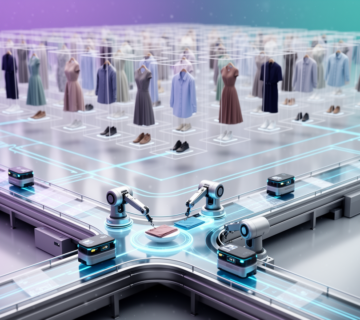


Generative AI for ecommerce is a breakthrough technology that creates original content—product descriptions, images, personalized recommendations, and conversational responses—moving beyond traditional automation to fundamentally transform how online businesses engage customers and manage operations.
I’m gonna be honest with you: when I first heard about generative AI transforming ecommerce, I pictured robot shop assistants writing poetry about sneakers. Turns out, it’s way cooler than that—and way more practical.
Picture this: you’re running an online store with 10,000 products. Every single one needs a description, probably multiple versions for different channels. Your copywriter just laughed hysterically and quit. This is where generative AI for ecommerce walks in like a caffeinated superhero, ready to write, optimize, and personalize content faster than you can say “conversion rate optimization.”
But here’s the thing—this technology isn’t just about cranking out product descriptions. It’s fundamentally changing how customers shop, how businesses forecast inventory, and how conversations happen between brands and buyers. Let’s dig into what makes this such a game-changer.
What Exactly Is Generative AI for Ecommerce?
Unlike traditional AI that analyzes existing data and follows predefined rules, generative AI actually creates new content from scratch. Think of it as the difference between a librarian who organizes books and an author who writes them.
In the ecommerce context, this means systems that can:
- Write unique product descriptions tailored to different customer segments
- Generate product images and visual assets
- Create personalized shopping recommendations based on behavioral patterns
- Conduct natural, human-like conversations with customers
- Predict market trends and demand patterns
The technology learns from massive datasets—product catalogs, customer interactions, market trends—then produces original outputs that feel surprisingly human. Sometimes eerily so.
How Generative AI Differs From Traditional Ecommerce Automation
Traditional automation follows if-then rules: if customer abandons cart, then send email. Simple, effective, but rigid.
Generative AI adapts and creates. It might notice that customers who browse hiking boots on rainy days respond better to adventure-focused messaging, then automatically generate and test variations. It’s less “follow the script” and more “improvise based on the situation.”
Why Generative AI for Ecommerce Matters Right Now
Here’s the simple version: customer expectations have skyrocketed while attention spans have plummeted. Shoppers expect personalized experiences, instant answers, and products that feel handpicked for them—at scale.
Manual processes can’t keep up. Even the best marketing team can’t write personalized content for thousands of customers daily. AI-Powered Ecommerce: How Smart Automation Improves Conversion Rates explores this challenge in depth.
Generative AI solves three critical pain points:
- Content bottlenecks: Generating product descriptions, category pages, and marketing copy at scale
- Personalization gaps: Creating unique experiences for each customer without exponentially increasing workload
- Service scalability: Handling customer inquiries 24/7 with responses that actually feel helpful
The Business Case Nobody Talks About
Most articles will tell you about increased conversion rates (which, yes, are important). But there’s a quieter benefit: operational sanity.
When your team isn’t drowning in repetitive content creation or answering the same customer questions for teh thousandth time, they can focus on strategy, creativity, and solving complex problems. That shift from tactical execution to strategic thinking? That’s where real competitive advantage lives.
Core Applications: Where Generative AI Actually Works in Ecommerce
Conversational Commerce and Customer Experience
Forget clunky chatbots that respond with “I didn’t understand that” every third message. Modern generative AI creates conversations that flow naturally, understand context, and actually help customers find what they need.
These systems transform standard customer service into guided shopping experiences. A customer asks about “something for my teenager’s first camping trip,” and the AI doesn’t just list products—it asks clarifying questions, suggests complete kits, and explains choices in plain English.
For B2B ecommerce, this becomes even more valuable. Complex products that require configuration or technical specifications? Generative AI can walk buyers through decision trees that would normally require a sales engineer.
Content Creation That Actually Scales
Let’s pause for a sec and appreciate the magnitude of the content problem in ecommerce. Every product needs:
- Short descriptions for mobile
- Detailed descriptions for desktop
- SEO-optimized category content
- Social media copy
- Email marketing variations
- A/B test alternatives
Multiply that by thousands of products, and you’ve got a full-time job for a small army of writers. Generative AI handles this at scale while maintaining brand voice consistency.
Even better? It continuously optimizes based on performance data. Descriptions that drive conversions get reinforced; underperformers get revised. It’s like having a copywriter who never sleeps and learns from every customer interaction.
AI Upsell Automation and Revenue Optimization
Here’s where things get interesting for your bottom line. AI upsell automation uses generative models to identify cross-sell and upsell opportunities in real-time, then creates personalized recommendations with contextual messaging.
Traditional upsell logic: “Customers who bought X also bought Y.” Basic but limited.
Generative AI upsell: Analyzes the customer’s browsing behavior, purchase history, time of day, device type, and dozens of other signals to generate personalized bundles with custom messaging explaining why these products work together.
The difference? One feels algorithmic; the other feels thoughtful. Customers respond better when recommendations come with reasoning.
Operations and Supply Chain Intelligence
Beyond customer-facing applications, generative AI tackles operational challenges that directly impact profitability:
- Demand forecasting: Analyzing patterns to predict what products will sell, when, and in what quantities
- Inventory optimization: Balancing stock levels to avoid both oversupply and stockouts
- Dynamic pricing: Adjusting prices across catalogs based on demand, competition, and market conditions
- Supply chain disruption prediction: Identifying potential issues before they cascade into major problems
This isn’t glamorous, but it’s where significant cost savings hide. Getting inventory forecasting even moderately more accurate can dramatically reduce carrying costs and lost sales.
How to Actually Implement Generative AI in Your Ecommerce Business
The biggest mistake companies make? Trying to transform everything at once. That’s a recipe for overwhelm, blown budgets, and initiative fatigue.
Start with one specific, measurable use case. Not “improve customer experience” (too vague), but “reduce customer service response time for size and fit questions” (specific and measurable).
The Practical Implementation Framework
Step 1: Identify Your Biggest Bottleneck
Where is manual effort creating the most friction? Product content creation? Customer service volume? Personalization gaps?
Step 2: Match Technology to Problem
Not every generative AI solution fits every problem. Conversational AI excels at customer interactions. Content generation models handle product descriptions. Match the tool to the task.
Step 3: Integration Over Replacement
Generative AI works best when integrated with existing platforms—your ecommerce system, CRM, and inventory management. Standalone tools create data silos and operational headaches. Ecommerce Conversational AI: Turning Chatbots into Sales Assistants offers integration insights worth reviewing.
Step 4: Measure What Matters
Define success metrics before implementation. Response time reduction? Conversion rate improvement? Content production speed? Track obsessively and adjust accordingly.
What Implementation Actually Looks Like
Real companies are already testing these waters. Travel giant eDreams ODIGEO partnered with major cloud providers to pioneer generative AI applications, focusing on personalized travel recommendations and conversational booking assistance.
Industry workshops and specialized initiatives are popping up, indicating this technology is moving from experimental to mainstream. Both B2B and B2C sectors are finding value, though applications differ—B2B emphasizes guided selling for complex products while B2C focuses on personalization at scale.
For more context on AI implementation in ecommerce, check this external resource from Shopify’s enterprise team.
Common Myths About Generative AI in Ecommerce
Myth 1: “It’ll Replace My Entire Team”
Here’s the truth: generative AI amplifies human capabilities rather than replacing them. Your content team shifts from writing every product description to crafting brand voice guidelines and reviewing AI outputs. Customer service reps handle complex issues while AI manages routine inquiries.
Think of it as upgrading from a bicycle to an electric bike. You’re still pedaling—you’re just covering more ground with less exhaustion.
Myth 2: “Implementation Requires a Data Science PhD”
Early generative AI required serious technical chops. Modern platforms? Increasingly plug-and-play. Many solutions integrate with Shopify, WooCommerce, and other platforms through straightforward APIs or native apps.
The learning curve exists, but it’s measured in weeks rather than months. Focus on understanding your business problem rather than mastering machine learning theory.
Myth 3: “Only Enterprise Companies Can Afford This”
Pricing models have evolved dramatically. SaaS-based generative AI tools now offer usage-based pricing that scales with your business. Small stores might pay less monthly than their email marketing platform costs.
The ROI calculation becomes straightforward: if AI-generated content lets you list products faster or personalized recommendations increase average order value, the investment pays for itself quickly.
Myth 4: “AI-Generated Content Feels Robotic”
First-generation AI content? Definitely robotic. Current models? Surprisingly nuanced when properly trained on your brand voice and provided with good prompts.
The key is oversight. AI generates draft content that human editors refine. This hybrid approach combines speed with quality, producing content that maintains your brand’s personality while scaling production.
Real-World Examples: Generative AI in Action
Let’s get concrete with scenarios that show how this technology functions in everyday ecommerce contexts.
Scenario 1: The Fashion Retailer’s Content Problem
A mid-sized clothing retailer launches seasonal collections—hundreds of new items quarterly. Writing unique descriptions for each piece was taking three weeks per launch, delaying time-to-market.
They implemented generative AI that learned their brand voice from existing top-performing content. The system now generates first drafts in hours. Editors review and refine, cutting total time to three days. Faster launches mean capturing demand while trends are hot.
Scenario 2: B2B Industrial Supplies and Guided Selling
An industrial supply distributor sells thousands of technical products—fasteners, adhesives, components. Buyers need help selecting correct specifications but sales reps couldn’t scale to handle every inquiry.
Generative AI powers a conversational assistant that asks qualifying questions, narrows options, and explains technical differences in accessible language. Sales reps focus on complex custom orders while the AI handles standard inquiries, maintaining service quality as order volume grows.
Scenario 3: Dynamic Personalization at Scale
An electronics retailer wanted personalized homepage experiences for each visitor but couldn’t manually create thousands of variations.
Generative AI analyzes visitor behavior and creates customized product arrangements with tailored messaging. A college student browsing laptops sees budget-friendly options with student discount messaging. A professional photographer sees high-end cameras with technical specifications emphasized. Same inventory, infinitely personalized presentation.
Security, Fraud Detection, and Risk Management
Here’s something people don’t talk about enough: generative AI’s role in protecting your business and customers.
Modern fraud detection systems use generative models to identify suspicious patterns by learning what “normal” looks like across millions of transactions, then flagging anomalies. These systems adapt as fraud tactics evolve, staying ahead of increasingly sophisticated attacks.
This matters more than ever as payment fraud grows more complex. Traditional rule-based systems flag legitimate transactions while missing sophisticated fraud. Generative AI reduces false positives while improving actual threat detection.
What’s Next? The Future of Generative AI in Ecommerce
The technology is still early. Current applications represent the baseline of what’s possible rather than the ceiling.
Near-term developments to watch:
- Multimodal generation: Systems that seamlessly create text, images, and video together for cohesive product presentations
- Voice commerce integration: Conversational AI that works naturally through voice interfaces
- Predictive customer service: AI that anticipates problems and reaches out proactively before customers even realize they need help
- Autonomous pricing optimization: Systems that continuously adjust pricing across entire catalogs based on real-time market intelligence
As the technology matures and implementation patterns become established, generative AI will shift from competitive advantage to standard infrastructure—the baseline expectation rather than the differentiator.
Companies that build expertise now position themselves to extract maximum value as capabilities expand. Those who wait will find themselves playing catch-up in increasingly AI-native markets.
Ready to explore specific implementation tactics? How to Use Chatbot for Ecommerce Sales and Conversions offers practical next steps for conversational AI specifically.
Frequently Asked Questions
What is generative AI for ecommerce?
Generative AI for ecommerce is technology that creates original content—including product descriptions, images, personalized recommendations, and conversational responses—to enhance customer experiences and automate operational tasks at scale.
How does generative AI differ from traditional ecommerce automation?
Traditional automation follows preset rules while generative AI creates adaptive, original outputs based on learned patterns, enabling personalization and creativity that rigid rule-based systems cannot achieve.
What are the main benefits of using generative AI in online stores?
Key benefits include scaling content production, delivering personalized customer experiences, automating routine inquiries, optimizing pricing dynamically, and improving operational efficiency through better demand forecasting and inventory management.
Do I need technical expertise to implement generative AI in my ecommerce business?
Modern generative AI platforms increasingly offer user-friendly interfaces and integrations with popular ecommerce systems, making implementation accessible without requiring deep technical expertise, though understanding your specific business problems remains essential.
How does AI upsell automation improve ecommerce revenue?
AI upsell automation analyzes customer behavior in real-time to generate personalized product recommendations with contextual messaging that explains why items complement each other, creating more relevant suggestions that customers perceive as thoughtful rather than algorithmic.