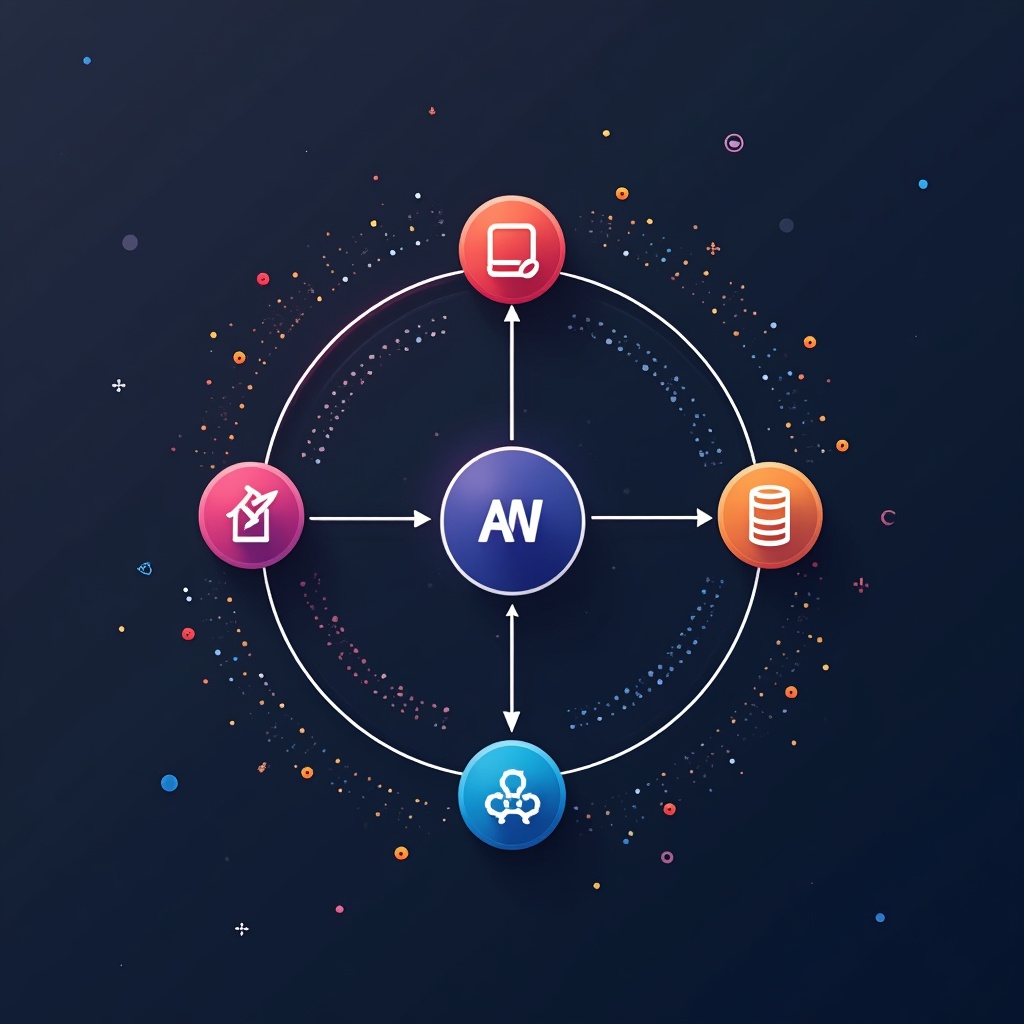

QuickSight Workflow: Building Data Analytics Pipelines involves creating end-to-end data processing systems on AWS that collect, transform, store, and visualize information using integrated services like S3, Glue, Lambda, Athena, and QuickSight to turn raw data into actionable business intelligence.
Picture this: You’re drowning in data. Customer interactions, sales figures, social media mentions, server logs—it’s all piling up faster than you can say “spreadsheet overload.” Meanwhile, your boss wants insights yesterday, and your current process involves copying data between five different tools while praying nothing breaks. Sound familiar?
That’s exactly where building a QuickSight Workflow: Building Data Analytics Pipelines on AWS comes in. Instead of duct-taping solutions together, you’re gonna create a smooth, automated highway where data flows from source to stunning dashboard without you having to babysit every step.
Let’s break it down and see how you can build something that actually works.
What Is QuickSight Workflow: Building Data Analytics Pipelines?
Think of a data analytics pipeline like a factory assembly line, except instead of building cars, you’re building insights. Raw data comes in one end—messy, unorganized, maybe stored in different formats across different systems. The pipeline processes, cleans, and transforms that data, then delivers it as polished reports and visualizations on the other end.
In the AWS ecosystem, this means connecting multiple services into a cohesive workflow. Amazon S3 stores your data lake (cheaply, thankfully). AWS Glue handles the heavy lifting of extracting, transforming, and cataloging your data. AWS Lambda jumps in for event-driven processing tasks. Amazon Athena lets you query everything using plain SQL. And Amazon QuickSight turns those queries into gorgeous dashboards your stakeholders will actually understand.
The magic happens when you orchestrate all these pieces using AWS Step Functions, which acts like a conductor ensuring every service plays its part at exactly the right moment. No more manual handoffs, no more “oops I forgot to run that script” moments at 2 AM.
Core Components You’ll Actually Use
Here’s what each service brings to the table:
- Amazon S3: Your foundation—stores everything from raw CSV files to processed Parquet datasets
- AWS Glue: The ETL workhorse that discovers, transforms, and catalogs your data automatically
- AWS Lambda: Lightweight functions that trigger on events (new file uploaded? Lambda can kick off the pipeline)
- Amazon Athena: Query your S3 data lake using standard SQL—no database servers required
- AWS Step Functions: Orchestrates the workflow, handles retries, and manages complex branching logic
- Amazon QuickSight: Creates interactive dashboards that update automatically as new data flows through
Unlike traditional analytics stacks that require you to provision servers, patch databases, and manage infrastructure, this serverless approach scales automatically and charges you only for what you use. Amazon QuickSight’s official documentation provides detailed pricing that shows just how cost-effective this can be compared to legacy BI tools.
Why Building These Pipelines Actually Matters
Here’s the thing: data analytics isn’t just a nice-to-have anymore. Companies that can quickly turn data into decisions are eating everyone else’s lunch. But speed only matters if you’re not sacrificing accuracy or losing your mind in the process.
Manual data processes create three massive problems. First, they’re slow—by the time you’ve manually prepped last week’s data, the insights are already stale. Second, they’re error-prone—one wrong formula or forgotten step and your entire analysis goes sideways. Third, they don’t scale—what works for 1,000 records becomes impossible at 1,000,000.
Real Business Impact
Automated pipelines change the game completely:
- Speed: Data flows from source to dashboard in minutes instead of days
- Consistency: The same transformation logic applies every single time—no human variability
- Scalability: Handle 10x or 100x more data without rewriting your entire process
- Cost efficiency: Serverless architecture means you’re not paying for idle servers
- Focus: Your team analyzes insights instead of wrestling with data prep
A retail company processing customer behavior data, for example, can shift from weekly reports to real-time dashboards. Marketing teams see campaign performance as it happens. Product managers spot usage patterns within hours. Finance gets daily revenue updates without manually exporting anything.
That’s not just convenient—it fundamentally changes how fast an organization can respond to opportunities or problems.
How QuickSight Workflow Pipelines Work (The Beginner-Friendly Version)
Let’s walk through what actually happens when you build one of these pipelines. I promise to keep it practical and skip the buzzword soup.
Step 1: Data Lands in Your Lake
Everything starts with data arriving in Amazon S3. Maybe your application writes log files there. Perhaps you’ve set up a connector that pulls data from your CRM nightly. Or users upload CSV files through a simple interface.
S3 acts as your staging area—raw, unprocessed data just sits there, organized in folders (called “prefixes” in S3 terminology, but let’s call them folders because that’s what they look like).
Step 2: Trigger the Workflow
When new data appears, you need to kick off processing. This happens one of two ways:
- Event-driven: An S3 event triggers a Lambda function the moment a new file lands
- Scheduled: A CloudWatch Events rule starts your Step Functions workflow at specific times (daily at 2 AM, every hour, etc.)
For most use cases, scheduled workflows make more sense. They’re predictable, easier to troubleshoot, and let you batch multiple files together for more efficient processing.
Step 3: Transform and Catalog
Here’s where AWS Glue does the heavy lifting. A Glue job reads your raw data, applies transformations (clean nulls, standardize formats, join datasets, calculate derived fields), and writes the processed results back to S3—usually in a more efficient format like Parquet.
At the same time, the Glue Data Catalog automatically tracks your data schema. Think of it as a metadata repository that remembers what columns exist, what data types they are, and where everything lives.
In plain English: Glue turns your messy data into clean, queryable datasets and keeps a detailed inventory of what you’ve got.
Learn more in
Asana Workflow: Building Efficient Project Systems
.
Step 4: Query with Athena
Once your data sits in S3 in a clean format and the Glue catalog knows about it, Amazon Athena lets you query it using standard SQL. No database to set up, no servers to manage—just write a SELECT statement and Athena scans your S3 data directly.
This is perfect for ad-hoc analysis or for creating views that QuickSight will read. You can aggregate millions of rows, join multiple datasets, and filter to exactly what matters—all with familiar SQL syntax.
Step 5: Visualize in QuickSight
Finally, Amazon QuickSight connects to your Athena queries (or directly to S3 via the Glue catalog) and builds interactive dashboards. Bar charts, line graphs, heat maps, pivot tables—whatever helps your audience understand the story.
The beauty is that QuickSight refreshes automatically. As new data flows through your pipeline, dashboards update on schedule without anyone lifting a finger. Your Monday morning executive report always shows the latest data, even though you built the dashboard once, weeks ago.
Step 6: Orchestrate Everything with Step Functions
AWS Step Functions ties all these pieces together in a visual workflow. You define the sequence: first run Glue job A, then wait for it to complete, then run Glue job B, then trigger an Athena query, then refresh the QuickSight dataset.
If something fails? Step Functions can retry automatically, send an alert, or branch to an error-handling workflow. This makes your pipeline resilient instead of fragile—it recovers from hiccups without waking you up at 3 AM.
Common Myths About Data Analytics Pipelines
Let’s clear up some misconceptions that stop people from building these workflows in the first place.
Myth 1: “You Need a PhD to Build This”
Nope. Do you need some technical chops? Sure—basic SQL, a willingness to learn AWS concepts, maybe some Python for custom transformations. But you don’t need to be a data scientist or cloud architect.
AWS provides tons of blueprints and templates. Follow a tutorial, tweak it for your data, and you’ve got a working pipeline. Start simple, add complexity as you learn.
Myth 2: “Serverless Means It’ll Cost a Fortune”
Actually, serverless usually costs less than traditional infrastructure. You’re not paying for servers that sit idle 22 hours a day. S3 storage is dirt cheap. Glue charges per second of job runtime. Athena bills per query scanned.
For small to medium workloads, you might spend $50–$200 per month total. Compare that to licensing fees for enterprise BI tools or the cost of maintaining your own database servers.
Myth 3: “Real-Time Means I Need Kafka or Complex Streaming”
Not necessarily. If “real-time” actually means “updated every 15 minutes,” you can absolutely achieve that with scheduled batch processing. True sub-second streaming requires Amazon Kinesis or similar, but most business use cases don’t need that level of immediacy.
Ask yourself: would hourly updates actually solve your problem? Often the answer is yes, and suddenly your architecture becomes way simpler.
Myth 4: “Once I Build It, It’ll Run Forever Without Maintenance”
Let’s pause for a sec. Pipelines are more reliable than manual processes, but they’re not magic. Data sources change schemas. Business logic evolves. AWS deprecates old API versions.
Plan for occasional maintenance—maybe one day per quarter reviewing and updating your workflows. That’s still drastically less effort than manual processes, but it’s not zero.
Real-World Examples of QuickSight Workflows
Theory is great, but seeing how real organizations use these pipelines makes everything click.
E-commerce: Daily Sales Dashboard
An online retailer uploads transaction data to S3 every night at midnight. A Step Functions workflow kicks off at 1 AM, running a Glue job that cleans the data, calculates key metrics (conversion rate, average order value, top products), and writes results to a curated S3 bucket.
Athena views aggregate this data by region, product category, and time period. QuickSight dashboards visualize trends, compare week-over-week performance, and highlight anomalies. By 6 AM when the business team logs in, yesterday’s complete sales picture is waiting for them.
SaaS Company: Product Usage Analytics
A software company logs every user action to S3 via Lambda functions. Every hour, a pipeline processes new log batches, joins them with customer metadata from another S3 bucket, and enriches the dataset with calculated fields (session duration, feature adoption scores, churn risk indicators).
Product managers use QuickSight to track which features customers actually use, where they get stuck, and which user segments show the highest engagement. This data drives roadmap decisions and helps the support team identify common pain points before customers complain.
Media Company: Social Sentiment Analysis
A content publisher pulls social media mentions (Reddit threads, Twitter conversations) via APIs and lands them in S3. A pipeline uses Glue jobs with custom Python scripts to perform sentiment analysis using AWS Comprehend, categorize topics, and track trending discussions.
QuickSight dashboards show real-time sentiment scores, identify viral content opportunities, and alert editorial teams when negative sentiment spikes around specific topics. Instead of manually scrolling through social feeds, editors get automated intelligence reports.
AWS Big Data Blog regularly publishes detailed case studies showing exactly how organizations architect these solutions, including code samples and architecture diagrams.
Building Your First Pipeline: A Simple Framework
Ready to get started? Here’s a practical 1–2–3 approach that actually works:
Phase 1: Pick One Use Case
Don’t try to migrate your entire analytics stack on day one. Pick a single, well-defined use case—maybe a weekly report you’re currently building manually, or a dashboard that’s annoying to update.
Make sure it has clear inputs (specific data sources) and outputs (defined metrics or visualizations). Start small, prove value, then expand.
Phase 2: Design the Flow on Paper
Before touching AWS, sketch out your workflow:
- Where does data come from?
- What transformations are needed?
- What’s the final output format?
- Who needs access to the results?
- How often should this run?
This 10-minute exercise prevents hours of rework later when you realize you forgot a critical step.
Phase 3: Build Incrementally
Start with just the data ingestion—get your raw data into S3. Verify that works. Then add a simple Glue job that does one transformation. Test it. Then add Athena queries. Test those. Finally, connect QuickSight.
Building in small increments means when something breaks (it will), you know exactly which piece to troubleshoot. Trying to build everything at once turns debugging into a nightmare.
Phase 4: Automate and Monitor
Once your manual workflow runs successfully, wrap it in Step Functions for automation. Add CloudWatch alarms that notify you if jobs fail or take unusually long.
Set up SNS (Simple Notification Service) to send emails or Slack messages when errors occur. You want to find out about problems before your users do.
Skills You’ll Need (And How to Learn Them)
Building QuickSight Workflow: Building Data Analytics Pipelines requires a mix of skills, but none of them are impossible to pick up.
Essential Skills
- SQL: You’ll write queries in Athena and possibly Glue—basic SELECT, JOIN, WHERE, GROUP BY will cover 80% of needs
- AWS Console navigation: Understanding how to find services, read documentation, and follow tutorials
- Basic Python (optional but helpful): For custom Glue transformations beyond what visual ETL can handle
- Data modeling concepts: Understanding facts vs. dimensions, how to structure data for analysis
Learning Path
Start with AWS’s own free tier and hands-on labs. The AWS Getting Started resource center offers step-by-step tutorials specifically for analytics workflows.
Build a portfolio project using public datasets (government data, Kaggle competitions, etc.). Create a pipeline that ingests, transforms, and visualizes something you’re personally interested in—sports stats, movie ratings, weather patterns. Learning is way easier when you care about the outcome.
Join communities like the AWS subreddit or Stack Overflow. When you get stuck (you will), these communities can unstick you in hours instead of days.
Common Pitfalls and How to Avoid Them
Learn from others’ mistakes so you don’t have to make them all yourself.
Pitfall 1: Ignoring Data Quality Early
It’s tempting to focus on the pipeline machinery and assume your source data is fine. Don’t. Spend time upfront understanding your data—its quirks, missing values, edge cases.
Build data quality checks into your Glue jobs. Count records, check for nulls in critical fields, validate ranges. Catching bad data early saves debugging headaches later.
Pitfall 2: Over-Engineering the First Version
You don’t need complex data partitioning, multi-region replication, and advanced optimization techniques on day one. Get something working, prove the value, then optimize.
Perfectionism kills momentum. Ship the simple version, let real usage guide your improvements.
Pitfall 3: Not Documenting Anything
Future you (three months from now) will have zero memory of why you structured that transformation the specific way you did. Write short comments in your code. Keep a simple README that explains what each component does.
When someone else needs to modify the pipeline—or when you’re troubleshooting at 4 PM on a Friday—you’ll thank past you for leaving breadcrumbs.
Pitfall 4: Forgetting About Costs
Serverless doesn’t mean free. Set up