

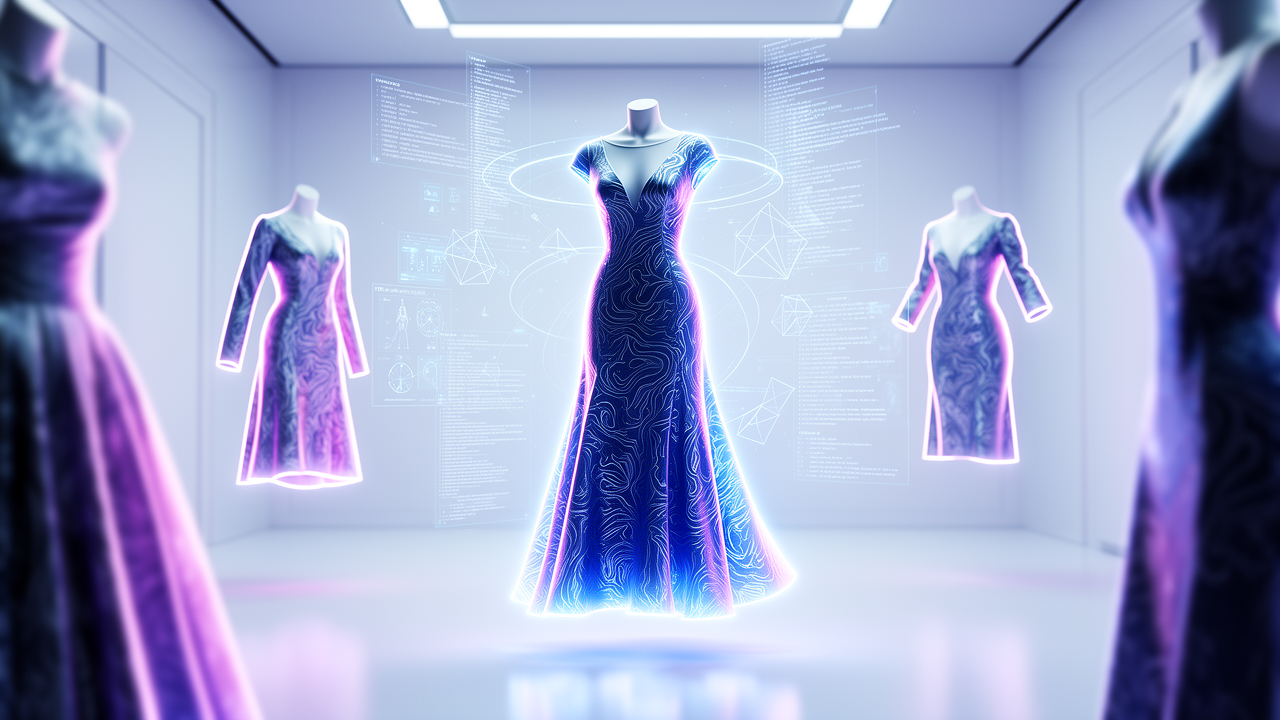
Quick Answer: Generative AI in e-commerce helps clothing brands create product descriptions, campaign content, personalized shopping experiences, virtual try-on previews, styling assistance, and customer support at scale. The goal is not to replace the creative team, but to help the brand launch collections faster, reduce repetitive work, and give shoppers more confidence before they buy.
Picture this: You’re scrolling through a clothing store at 2 a.m. (no judgment, we’ve all been there), looking at a jacket that seems almost perfect. The product page explains how it fits, suggests trousers that actually match, answers your oddly specific question about whether the fabric works in warm weather, and lets you preview the look before buying.
That’s not magic. That’s generative AI in e-commerce doing its thing.
For clothing brands, the pressure is especially intense. New collections arrive constantly, product catalogs grow fast, trends change without warning, and every item needs photos, descriptions, campaigns, translations, sizing information, emails, social posts, and customer support.
What used to require weeks of coordination can now be handled faster with AI-assisted workflows. Not fully automated, not blindly published, and definitely not without human review—but faster, more consistently, and at a scale that would exhaust even the most caffeinated marketing team.
What Is Generative AI in E-Commerce?
Generative AI refers to artificial intelligence systems that create new content—text, images, conversations, product summaries, campaign ideas, and other outputs—rather than only analyzing existing data.
In fashion e-commerce, this might mean:
- Writing product descriptions from verified catalog data
- Creating variations of email and advertising copy
- Generating localized content for different markets
- Powering conversational shopping and styling assistants
- Producing visual previews and virtual try-on experiences
- Summarizing reviews about sizing, fabric, or fit
Think of it as the difference between a vending machine and a personal stylist. Traditional automation follows predefined rules. Generative AI can use context—such as product details, brand voice, customer questions, and shopping intent—to create a more relevant response.
That doesn’t mean the AI magically understands fashion. It still needs accurate product data, clear instructions, and human oversight. But when those pieces are in place, it becomes a seriously useful assistant.
The Building Blocks Behind Fashion AI
Most generative AI applications rely on large language models, image-generation systems, or multimodal models that can work with both text and visuals.
For a clothing brand, the quality of the output depends heavily on the information provided to the system:
- Product data: fabric, cut, size range, color, care instructions, and availability
- Brand guidelines: tone, vocabulary, positioning, and words the brand avoids
- Visual assets: approved product images, model photography, and campaign references
- Customer context: browsing behavior, previous purchases, questions, and preferences where appropriate
- Business rules: return policies, shipping information, promotions, and regional restrictions
Here’s what makes generative AI different from earlier ecommerce automation:
- Creation vs. prediction: It can produce a new description, answer, image, or campaign variation
- Context awareness: It can adapt the output to a product category, customer question, or brand tone
- Scalability: The same workflow can assist with ten products or ten thousand
- Multichannel use: One approved source can support product pages, emails, ads, social media, and customer service
Why Clothing Brands Use Generative AI in E-Commerce to Scale Faster
Let’s pause for a second and talk about the elephant in the virtual fitting room: why should a clothing brand care about this particular technology when a new “game-changing” AI tool appears every other week?
The answer isn’t simply “because AI is popular.”
Clothing brands face a combination of problems that generative AI is unusually well suited to help with: large product catalogs, fast collection cycles, visual buying decisions, sizing uncertainty, content bottlenecks, international markets, and repetitive customer questions.
Shopify’s current overview of generative AI use cases in ecommerce highlights applications across product content, marketing channels, customer support, and operational analysis. For fashion stores, those areas are closely connected.
A new clothing collection doesn’t just need products. It needs a complete content system around those products.
Content Production Without the Burnout
I once heard an ecommerce manager describe launching a new collection as “copying the same chaos into a different spreadsheet.” Honestly, that feels accurate.
Every new item may require:
- A detailed product description
- A shorter mobile-friendly summary
- Fabric and care information
- SEO title and meta description
- Email campaign copy
- Social media captions
- Ad variations
- Translations for different markets
Multiply that by hundreds or thousands of SKUs, and suddenly the creative team isn’t being creative anymore. They’re moving text from one box to another while quietly questioning every career decision they’ve ever made.
Generative AI can produce first drafts and channel-specific variations from approved product information. The team still reviews the output, but it no longer has to begin every description with a blank page.
Personalization at a Scale Humans Cannot Manually Manage
Every retailer wants shoppers to feel understood. The problem is that manually personalizing the experience for thousands of visitors is impossible.
Generative AI can help adapt the shopping journey by:
- Emphasizing comfort, sustainability, versatility, or styling depending on customer intent
- Creating personalized email copy around relevant product categories
- Answering questions about styling combinations
- Suggesting alternatives when a size or color is unavailable
- Explaining why a recommended product may suit the shopper’s needs
The important word here is relevant, not creepy.
Personalization should help the shopper make a decision. It should not feel like the store has been watching through the window since Tuesday.
Faster Expansion Into New Markets
International fashion ecommerce involves more than translating “summer dress” into another language.
Different markets use different sizing terms, seasonal language, styling references, cultural expectations, and purchasing habits. A direct translation can be technically correct and still sound like it was written by a very confused instruction manual.
Generative AI can help clothing brands create localized versions of:
- Product pages
- Category introductions
- Advertising campaigns
- Email flows
- Customer service responses
- Size and care explanations
Human reviewers who understand the target market are still essential, but AI can dramatically reduce the time needed to prepare the first version.
Practical Generative AI Use Cases for Clothing Brands
The most useful applications aren’t the ones that look impressive during a presentation. They’re the ones that solve a repetitive problem every single week.
1. Product Description Generation
This is usually the easiest place to start.
A brand can connect verified catalog data to an AI workflow that produces descriptions using a consistent structure and tone.
For example, the system might receive:
- Product name
- Material and fabric composition
- Fit and silhouette
- Available sizes and colors
- Care instructions
- Approved selling points
It can then create:
- A full product description
- A short summary
- Key feature bullets
- SEO metadata
- Email and social media variations
The AI must never invent details that aren’t in the catalog. If the fabric isn’t wrinkle-resistant, the system shouldn’t confidently announce that it survives being folded inside a suitcase for three weeks.
A good workflow uses structured product data, clear prompts, and an approval step before publishing.
2. Campaign Content for New Collections
Fashion campaigns need a lot of variations.
The launch concept may stay the same, but the copy changes across:
- Homepage banners
- Collection pages
- Email subject lines
- Paid advertisements
- Instagram captions
- Short-form video scripts
- Influencer briefing documents
Generative AI can take an approved campaign direction and turn it into channel-specific drafts without losing the main message.
This doesn’t replace the creative director. It helps the creative director avoid spending Thursday afternoon rewriting the same sentence in twelve slightly different ways.
3. AI Virtual Try-On and Product Visualization
One of the biggest challenges in fashion ecommerce is simple: customers cannot physically try the product before buying.
Generative and visual AI systems can help shoppers preview how clothing may look using uploaded photos, model variations, or interactive visual experiences.
Google’s shopping tools, for example, have expanded virtual try-on features that allow shoppers to upload a photo and preview supported clothing items. This shows how quickly virtual visualization is moving from experimental technology toward a normal part of online shopping.
You can review Google’s explanation of its AI-powered virtual try-on shopping experience for a practical example.
For clothing brands, virtual try-on can:
- Make product pages more interactive
- Help shoppers visualize complete outfits
- Reduce hesitation before adding an item to the cart
- Differentiate the store from competitors using static product images
- Connect the visual preview directly with the purchase journey
The result is still a visual approximation, not a guaranteed prediction of physical fit. That distinction should always be clear to the customer.
JustOnePrompt also develops AI virtual try-on software for fashion stores that can be planned as a Shopify app, WooCommerce plugin, or independent SaaS product.
4. Size and Fit Guidance
Sizing questions create friction, returns, support tickets, and abandoned purchases.
AI can organize and summarize information from:
- Size charts
- Product measurements
- Verified customer reviews
- Return reasons
- Fit notes from the merchandising team
Amazon Fashion has described using AI and large language models to improve size charts, summarize relevant fit feedback, and provide personalized fit insights.
Its overview of AI-powered fashion fit features demonstrates how language models can make complicated sizing information easier for customers to understand.
A clothing brand could use a similar principle to answer questions such as:
- Does this item run small or large?
- Is the fabric stretchy?
- How does the fit compare with another product?
- Which measurement should the customer prioritize?
The system should explain available information clearly. It should not pretend it can guarantee fit when the underlying data does not support that promise.
5. Conversational Styling Assistants
Remember those old chatbots that responded to every question with “Please select one of the following options”?
Yeah. Nobody misses them.
A generative AI shopping assistant can have a more natural conversation with the customer. It can ask what type of event they’re shopping for, understand color or style preferences, recommend matching items, and suggest alternatives when something is unavailable.
A useful styling assistant might help with questions such as:
- What jacket works with these trousers?
- Can you build a complete outfit for a casual wedding?
- Which colors match this dress?
- Do you have a similar item with longer sleeves?
- What can I wear with these shoes?
The system becomes even more useful when it is connected to live inventory. There’s no point recommending the perfect outfit if every item has been out of stock since last winter.
6. Personalized Email and Post-Purchase Content
Generative AI can create email variations based on customer behavior, product category, location, or purchase stage.
Examples include:
- Welcome emails adapted to the customer’s interests
- Back-in-stock notifications with relevant alternatives
- Abandoned-cart messages that reference the selected style naturally
- Post-purchase care instructions
- Cross-sell suggestions based on the purchased outfit
- Review requests written in the brand’s tone
This works especially well when AI content is connected with store automation. The workflow detects an event, checks the relevant data, creates or selects suitable content, and sends it through the correct channel.
For the operational side, see how store automation services can connect orders, alerts, customer follow-up, email, WhatsApp, and internal tools.
7. Smarter Upselling Without the Pushy Salesperson Energy
Upselling in fashion should feel like styling help, not an ambush.
Instead of showing random expensive products, generative AI can explain why an additional item complements what the shopper already selected.
For example:
- A belt that completes the dress
- A jacket that matches the selected trousers
- A second color of an item the customer already likes
- A care product suitable for the fabric
- A complete outfit built around the main purchase
The recommendation engine may identify the products, while generative AI creates the explanation around them.
For a deeper look at this use case, read how generative AI can support ecommerce upsells with smart automation.
8. Review Summaries and Customer Insight
Customers rarely want to read 400 reviews to discover whether a shirt runs small.
Generative AI can summarize recurring themes from verified reviews, such as:
- Fit and sizing
- Fabric feel
- Color accuracy
- Comfort
- Durability
- Styling suggestions from buyers
These summaries can help shoppers, but they can also help the brand.
If hundreds of customers mention that a sleeve feels too short, that’s not just customer service information. That’s product development information waving both hands in the air.
How Generative AI Helps Clothing Brands Scale Without Losing Their Voice
Here’s the concern many brands have: if everyone uses the same AI tools, won’t every store start sounding exactly the same?
Yes—if the implementation is lazy.
Generic prompts produce generic content. If the instruction is simply “write a product description,” the output will probably contain phrases like “elevate your wardrobe” and “perfect for any occasion” until the internet collapses under the weight of its own adjectives.
A better system includes:
- Examples of approved brand copy
- Clear tone and vocabulary rules
- Words and claims the brand must avoid
- Different formats for products, emails, ads, and support
- Rules for fabric, sustainability, fit, and performance claims
- A human approval process
The goal is not to make AI sound human in a vague way. The goal is to make the output sound like the specific brand.
Create One Reliable Source of Product Truth
Before generating anything, organize the product information.
If the product management system says one thing, the supplier spreadsheet says another, and the website contains a third version copied in 2022, AI will not fix the confusion. It will simply generate the confusion faster.
Create a verified product source containing:
- Official product names
- Materials and percentages
- Measurements
- Size range
- Care instructions
- Available colors
- Approved claims
- Stock and regional availability
Generative AI should create content from this source rather than guessing from incomplete information.
Separate Generation From Publishing
One of the safest implementation rules is simple: generating content and publishing content should be two different steps.
A practical workflow might look like this:
- The product team enters or imports verified product data
- The AI generates the required content formats
- A team member reviews claims, tone, and accuracy
- The approved version is published to the store
- Performance and customer feedback are monitored
Later, low-risk content may be approved automatically if the rules are reliable. But starting with full automatic publishing is how a brand ends up describing a polyester shirt as “handwoven from ethically sourced moonlight.”
Common Myths About Generative AI in Fashion Ecommerce
Myth #1: “It Will Replace the Creative Team”
Generative AI is good at variations, first drafts, formatting, summarization, and repetitive content production.
It is much less reliable at defining a distinctive brand identity, understanding cultural nuance without guidance, making strategic creative decisions, or recognizing when an idea is technically correct but emotionally terrible.
The strongest setup is a creative team using AI as a production assistant—not an empty office with a chatbot wearing the creative director’s badge.
Myth #2: “It Is Only for Large Fashion Retailers”
Large retailers have more data and technical resources, but smaller clothing brands often have a clearer advantage: they can test one use case quickly.
A small Shopify or WooCommerce store might begin with:
- Product description drafts
- Email variations
- Customer question summaries
- Simple styling assistance
- A virtual try-on prototype for selected products
The goal isn’t to build the entire future of fashion commerce by next Tuesday. It’s to solve one costly or repetitive problem, measure the result, and expand carefully.
Myth #3: “AI Content Can Be Published Without Review”
Absolutely not.
Generative AI can invent details, misunderstand product information, exaggerate benefits, or create visuals that do not accurately represent the real item.
Human review is especially important for:
- Fabric and material claims
- Sustainability statements
- Size and fit guidance
- Care instructions
- Health or performance-related claims
- Generated product imagery
The technology is powerful. Powerful and unsupervised are not the same thing as useful.
Risks Clothing Brands Need to Manage
Inaccurate Product Information
An attractive description is useless if the product details are wrong.
AI-generated content must be grounded in verified catalog data. The system should not invent stretch, durability, fit, origin, or sustainability claims.
Misleading Generated Images
Generated fashion images can make a product appear different from reality. Colors, patterns, lengths, textures, and small design details may change during generation.
Brands should clearly distinguish between:
- Real product photography
- AI-generated campaign imagery
- Virtual try-on previews
- Concept images that do not represent an exact product
Transparency protects both the customer and the brand.
Customer Privacy
Virtual try-on, personalization, and conversational assistants may involve customer photos, preferences, or behavioral data.
Brands should explain:
- What information is collected
- Why it is needed
- How long it is stored
- Whether it is shared with another provider
- How the customer can delete or opt out
“Trust us, the AI needs it” is not a privacy policy.
Bias and Limited Representation
Fashion systems should be tested across different body types, sizes, skin tones, ages, and styling preferences.
A system trained or tested on a narrow set of examples may provide worse results for customers outside that set. Diverse testing is not an optional final step; it is part of building a usable product.
A Practical 90-Day Implementation Plan
You don’t need to rebuild the entire store. Start with one controlled use case.
Days 1–30: Choose the Problem and Prepare the Data
- Select one measurable problem
- Choose a limited product category
- Clean and verify product information
- Document the brand voice
- Define what the AI may and may not claim
- Set a baseline for time, cost, conversion, or support volume
A good first problem might be generating drafts for 100 product descriptions or handling common questions for one clothing category.
Days 31–60: Build and Test the Workflow
- Create prompt templates or automation steps
- Generate content using approved data
- Review accuracy and brand consistency
- Test with internal users or a small customer segment
- Record errors instead of pretending they didn’t happen
This stage is about learning what fails.
If every description contains the phrase “timeless elegance,” congratulations—you have discovered a prompt problem.
Days 61–90: Measure and Expand Carefully
Track metrics connected to the original problem:
- Time required to prepare product content
- Number of corrections before publishing
- Customer engagement with the new experience
- Conversion rate for tested product pages
- Support questions about sizing or products
- Return reasons
- Use of virtual try-on or styling features
Expand only after the workflow produces reliable results.
Scaling a broken workflow doesn’t make it smarter. It just creates mistakes at enterprise speed.
The Future of Generative AI in Clothing Ecommerce
The direction is becoming clear: shopping experiences will become more conversational, visual, and adaptive.
Customers will increasingly expect to:
- Describe what they want in natural language
- Build an outfit through conversation
- Preview clothing on a personal image
- Compare fit and style information quickly
- Receive product explanations adapted to their priorities
- Move from discovery to checkout without navigating endless menus
The broader ecommerce market is already moving toward AI-assisted discovery, personalization, and automation. McKinsey’s 2026 analysis of how AI is reshaping ecommerce growth and competition reflects the wider shift taking place.
But the winners won’t simply be the brands using the most AI.
They’ll be the brands using it where it genuinely improves the customer experience, reduces unnecessary work, and supports a clear business strategy.
Taking Action: Your Next Step
Start by identifying the bottleneck that slows the brand down most.
Is the team struggling to write product content? Are sizing questions overwhelming customer service? Does every collection launch require weeks of repetitive work? Are shoppers leaving because they cannot imagine how an item will look?
Match the problem to one AI use case, test it on a limited scale, and keep humans responsible for accuracy and brand judgment.
The competitive advantage won’t go to whoever installs the first AI tool they see.
It will go to the clothing brands that connect generative AI with reliable product data, thoughtful automation, strong creative direction, and a shopping experience customers actually trust.
Frequently Asked Questions
What is generative AI in e-commerce for clothing brands?
Generative AI in e-commerce helps clothing brands create product descriptions, campaign content, personalized responses, visual previews, styling assistance, and other shopping content from approved product and customer information.
How can generative AI help a fashion brand scale faster?
It can reduce repetitive content work, speed up collection launches, create channel-specific campaign variations, support localization, answer common customer questions, and assist with personalized shopping experiences.
Can AI generate accurate clothing product descriptions?
Yes, when the system uses verified product data and clear brand guidelines. Human review remains important because AI may invent or misunderstand details if the source information is incomplete.
Can generative AI reduce fashion ecommerce returns?
It may help reduce uncertainty through clearer sizing information, review summaries, fit guidance, and virtual try-on experiences. However, no AI system can guarantee fit or eliminate returns completely.
Is AI virtual try-on accurate?
AI virtual try-on provides a visual preview of how an item may look, but it should not be presented as a guaranteed representation of physical fit, fabric behavior, or exact color.
Do small clothing stores need a custom AI system?
Not always. A small store can begin with an existing tool or a limited automation workflow. Custom development becomes more useful when the brand needs unique integrations, control over data, a branded customer experience, or a scalable product for multiple stores.
What is the safest first generative AI use case?
Product description drafts are often a practical starting point because the workflow can use structured catalog data, remain behind a human approval step, and provide clear time-saving measurements.