

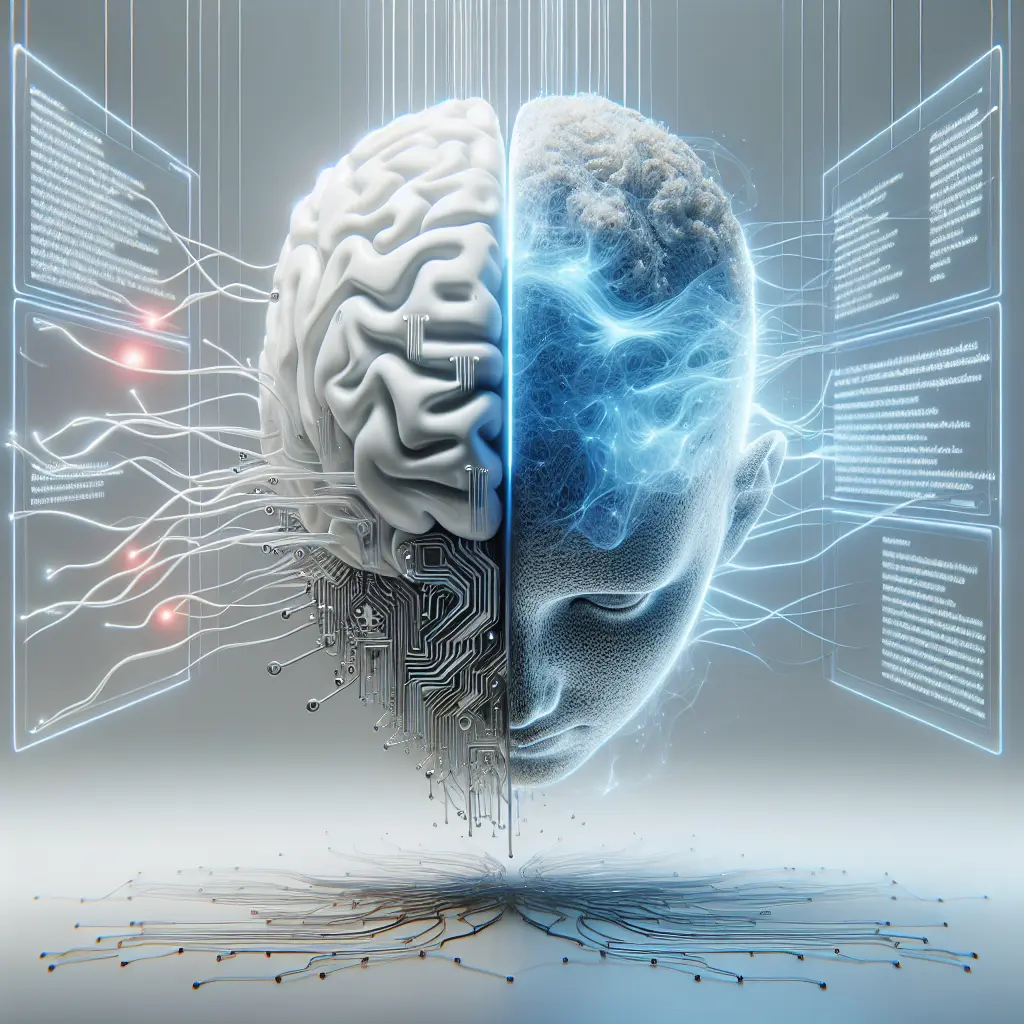
Is ChatGPT actually smart? The honest answer is: yes and no. ChatGPT can write, explain, summarize, code, brainstorm, and solve many structured problems, but it does not understand the world the way humans do. It is better to think of it as a powerful language model that predicts, reasons in patterns, and uses context—not as a conscious mind.
So, Is ChatGPT Actually Smart?
The first time ChatGPT completed a thought before I finished explaining it, I had that tiny “wait a second” moment.
You know the feeling.
You ask a question, and the answer comes back polished, confident, and weirdly human. It explains things. It writes jokes. It rewrites emails. It summarizes long documents. It can even help debug code or outline a business idea.
So the natural question is:
Is ChatGPT actually smart?
The answer depends on what you mean by “smart.”
If by smart you mean “can produce useful answers, connect ideas, explain concepts, and solve certain problems,” then yes, ChatGPT can look very smart.
If by smart you mean “has human understanding, consciousness, personal beliefs, emotions, and real-world awareness like a person,” then no. That is not what ChatGPT is.
The tricky part is that ChatGPT is good enough at language that it creates the feeling of intelligence. It can sound thoughtful even when it is only generating the most likely useful response based on patterns, context, and training.
That does not make it useless. Far from it.
It just means we need to understand what kind of “smart” we are dealing with.
What ChatGPT Really Is
At its core, ChatGPT is a large language model. That means it is an AI system trained to process and generate language.
It has learned from huge amounts of text, patterns, examples, conversations, code, explanations, and written structures. When you type a message, it uses that context to predict and generate a response that fits the request.
A simple way to imagine it:
ChatGPT is not a tiny human sitting inside your computer thinking deeply about your question.
It is closer to an extremely advanced language engine that has learned how humans write, ask, explain, argue, summarize, and solve problems in text.
That engine can be incredibly useful.
But it is not the same thing as human intelligence.
What ChatGPT Is Good At
- Generating clear text in different tones and formats.
- Explaining complex ideas in simpler language.
- Summarizing articles, notes, transcripts, or long documents.
- Brainstorming ideas for content, products, lessons, or workflows.
- Helping with code, formulas, outlines, and structured tasks.
- Translating or rewriting text in different styles.
- Following instructions when the task is clear.
What ChatGPT Is Not
- It is not conscious.
- It does not have emotions or personal experiences.
- It does not “know” things the way a human knows them.
- It does not have beliefs, opinions, or intentions of its own.
- It can be wrong, even when the answer sounds confident.
- It does not automatically understand truth just because it writes fluently.
That last point matters a lot.
ChatGPT can produce a sentence that sounds perfect and still be wrong.
Fluent language is not the same as reliable knowledge.
Why ChatGPT Feels Intelligent
ChatGPT feels intelligent because humans are language-sensitive creatures.
When something speaks clearly, responds to context, remembers what we just said, and adapts its tone, we naturally treat it as if there is a mind behind it.
That is not strange. It is how humans are wired.
We read intention into voices, faces, stories, and conversations. So when an AI system writes in a way that feels natural, our brain starts filling in the gaps.
It feels like understanding.
It feels like personality.
It feels like intelligence.
But what is happening underneath is different.
ChatGPT is working with patterns in language. It looks at your message, the conversation context, and the instruction it has been given, then generates a response that fits.
That can produce impressive results, especially when the question is well-structured.
But it can also produce mistakes, especially when the question requires exact facts, recent information, hidden context, or careful verification.
The Difference Between Pattern Matching and Understanding
Here is a useful example.
Imagine someone memorized thousands of restaurant reviews.
They could write a convincing review of a restaurant they had never visited. They might describe the atmosphere, the service, and the food in a way that sounds believable.
But did they actually eat there?
No.
They learned the pattern of restaurant reviews.
ChatGPT works in a much more advanced way, but the basic lesson is similar. It can generate language that matches what an answer should look like, even when it does not have direct experience or true understanding.
That is why it can explain a concept well one moment and then make a strange mistake the next.
It is not “lying” in the human sense.
It is generating text that appears likely, and sometimes that text is inaccurate.
Can ChatGPT Reason?
This is where the answer gets more nuanced.
Older explanations often say, “ChatGPT cannot reason.”
That is partly true, but it can also be misleading.
ChatGPT does not reason like a human being. It does not sit with a private inner experience, form beliefs, and consciously think through reality.
But it can perform some reasoning-like tasks.
For example, it can:
- Follow logical constraints in a puzzle.
- Compare two options.
- Break a problem into steps.
- Explain cause and effect.
- Spot contradictions in text.
- Use examples to support a conclusion.
So the better question is not “Can ChatGPT reason?”
The better question is:
How reliable is ChatGPT when a task requires reasoning?
And the answer is: it depends.
It depends on the model, the prompt, the complexity of the task, the available context, and whether the answer needs external verification.
For simple structured tasks, ChatGPT can be very useful.
For high-stakes decisions, legal advice, medical advice, financial decisions, or precise factual research, you should not treat it as the final authority.
What ChatGPT Can Do Surprisingly Well
Even if ChatGPT is not smart in the human sense, it can still be extremely capable.
That is the part people sometimes misunderstand.
A tool does not need consciousness to be useful.
A calculator does not understand mathematics like a professor, but it can still solve arithmetic accurately.
A camera does not understand beauty, but it can capture a beautiful image.
ChatGPT does not understand like a human, but it can still help with many real tasks.
Writing and Editing
ChatGPT is strong at drafting, rewriting, simplifying, expanding, and organizing text.
It can help turn messy notes into a clean article, rewrite a message in a more professional tone, or create outlines for blog posts, emails, landing pages, or scripts.
This makes it useful for marketers, writers, founders, students, and business owners who need to move from rough idea to usable draft faster.
Summarization
One of ChatGPT’s most practical strengths is summarization.
It can take a long piece of text and reduce it into key points, action items, or a simpler explanation.
This is useful for reports, meeting notes, documentation, research, and customer feedback.
But the summary should still be checked when accuracy matters.
Brainstorming
ChatGPT is useful when you need options.
It can generate headline ideas, product names, content angles, email structures, lesson plans, marketing hooks, or workflow suggestions.
Not every idea will be good.
But it can help you get past the blank page.
Learning Support
ChatGPT can explain topics in different ways.
You can ask it to explain like you are a beginner, give examples, create analogies, quiz you, or turn a difficult topic into a study plan.
That makes it useful as a learning assistant.
Still, it should not replace textbooks, expert sources, or verified references for serious study.
Code and Technical Help
ChatGPT can help write code snippets, explain errors, suggest debugging steps, and outline technical approaches.
But code generated by AI should be reviewed, tested, and secured before use.
A confident answer is not the same as production-ready code.
For businesses that want to use AI practically instead of just experimenting with prompts, this connects naturally with broader AI services that turn AI capabilities into real workflows, tools, and business systems.
The Hallucination Problem
One of the biggest signs that ChatGPT is not smart in the same way humans are is the hallucination problem.
A hallucination happens when ChatGPT generates information that sounds correct but is actually false, unsupported, or made up.
It may invent a source.
It may give a wrong date.
It may confidently explain a concept using incorrect details.
It may create a fake quote, a fake book title, or a fake historical event.
The dangerous part is not only that it can be wrong.
The dangerous part is that it can be wrong in a very convincing voice.
This happens because ChatGPT is not checking truth the way a human researcher checks a source. It generates likely text based on patterns and context.
Sometimes that likely text is accurate.
Sometimes it is not.
OpenAI also explains that ChatGPT can produce inaccurate information, so users should verify important answers instead of treating every response as guaranteed truth.
This is why ChatGPT is useful as an assistant, but risky as an unquestioned authority.
Is ChatGPT Just Advanced Autocomplete?
People often describe ChatGPT as “advanced autocomplete.”
That description is useful, but incomplete.
Yes, ChatGPT predicts language.
But it does that at a very advanced level, using context, instruction-following, examples, and complex learned relationships between words, ideas, and tasks.
So calling it autocomplete is technically helpful, but it can make the system sound simpler than it really is.
A better description might be:
ChatGPT is a powerful language model that can generate, transform, and organize text based on patterns, context, and instructions.
That does not make it human.
But it does make it useful.
Common Myths About ChatGPT Intelligence
Because ChatGPT sounds human, many myths appear around it.
Let’s clear up the biggest ones.
Myth 1: ChatGPT Understands Everything It Says
Not exactly.
ChatGPT can generate strong explanations, but that does not mean it understands the topic the way a person does.
It does not experience confusion, curiosity, or discovery.
It does not “realize” something.
It produces text that fits the task.
That text may be helpful, but it is not evidence of human-like understanding.
Myth 2: ChatGPT Has Opinions
ChatGPT can produce text that sounds opinionated, but it does not hold personal opinions.
If you ask it to argue for or against something, it can generate arguments based on patterns in language and information it has learned.
But it does not personally believe those arguments.
It has no private preferences, values, or emotional attachment to an answer.
Myth 3: ChatGPT Is Conscious
No.
ChatGPT has no consciousness, feelings, personal awareness, or subjective experience.
It does not feel happy when it helps you.
It does not feel embarrassed when it makes a mistake.
It does not know that it exists in the way humans experience existence.
Human-like language is not the same as consciousness.
Myth 4: ChatGPT Is Always Objective
ChatGPT is not automatically neutral or objective.
Its outputs can reflect patterns in training data, prompt wording, system behavior, and the context of the conversation.
It may simplify complex debates, miss minority viewpoints, or present a confident answer where the real situation is uncertain.
For controversial or high-stakes topics, it is better to ask for multiple perspectives and verify with trusted sources.
Myth 5: ChatGPT Can Replace Experts
ChatGPT can help you understand a topic, prepare questions, summarize information, or draft early ideas.
But it should not replace qualified experts in areas like medicine, law, finance, engineering safety, cybersecurity, or business-critical decision-making.
Use it to support your thinking, not to outsource responsibility.
A Simple Prompt to Test ChatGPT Yourself
If you want to see both the strengths and limits of ChatGPT, try giving it a logic puzzle.
Here is a prompt you can copy:
I want to test your reasoning abilities. Please solve this logic puzzle step by step, explaining your thinking clearly:

Three friends — Alex, Bailey, and Casey — each have a different pet: dog, cat, and bird. They also each have a different favorite color: red, blue, and green.

Clues:
1. The person who likes blue does not have a bird.
2. Alex does not like green.
3. The person with the dog likes red.
4. Bailey has a cat.

Who has which pet and what is each person's favorite color?

Explain the deduction process and check your final answer against every clue.
This kind of prompt is useful because it reveals both sides of the tool.
ChatGPT may follow the constraints correctly and explain the answer clearly.
Or it may make a small consistency mistake while still sounding confident.
That is the key lesson.
It can be helpful, but it still needs checking.
How to Use ChatGPT More Safely
The best way to use ChatGPT is to treat it like a capable assistant, not an all-knowing expert.
Here are practical habits that help.
Ask for Sources When Facts Matter
If the topic depends on current facts, laws, prices, policies, medical guidance, technical documentation, or financial details, ask for sources.
Then check those sources yourself.
Do not rely only on the generated answer.
Use It for Drafts, Not Final Truth
ChatGPT is excellent for first drafts, outlines, summaries, and idea generation.
But final decisions should still involve review.
That is especially true for professional work, published content, contracts, code, and advice that affects people’s money, health, or safety.
Give Clear Context
Bad prompts often produce vague answers.
Give ChatGPT the goal, audience, constraints, examples, and format you want.
For example, instead of asking:
Write about automation.
Ask:
Write a beginner-friendly explanation of business automation for small e-commerce stores. Keep it practical, avoid jargon, and include three examples.
Better context usually leads to better output.
Ask It to Check Its Own Answer
You can ask ChatGPT to review its answer for assumptions, missing details, weak logic, or possible errors.
This does not guarantee perfection, but it often improves the response.
Example:
Review your answer. List any assumptions you made, any facts that should be verified, and any possible weaknesses in the reasoning.Use Human Judgment
This is the most important habit.
ChatGPT can help you move faster, but it should not remove your judgment.
If something sounds too confident, too simple, or too perfect, pause and verify.
What Comes Next for AI Intelligence?
AI systems are improving quickly.
Newer models are better at following instructions, working with longer context, using tools, analyzing images, writing code, and handling structured tasks.
Future systems may become better at factual grounding, tool use, memory, planning, and self-correction.
That does not automatically mean they will become conscious or human-like.
There is a big difference between a system that performs intelligently and a system that experiences understanding.
We may keep getting AI tools that look smarter and work better without becoming minds in the human sense.
And honestly, that is still a big deal.
So, Is ChatGPT Actually Smart?
Here is the cleanest answer:
ChatGPT is smart as a tool, but not smart as a person.
It can process language in powerful ways.
It can help you write, learn, brainstorm, summarize, code, analyze, and organize ideas.
It can produce answers that feel intelligent.
But it does not have consciousness, real understanding, personal beliefs, or human common sense.
That means the right way to use it is not blind trust.
The right way is collaboration.
Let ChatGPT help with speed, structure, and ideas.
Let humans handle judgment, verification, responsibility, and meaning.
That balance is where the tool becomes genuinely valuable.
Final Thoughts: Impressive, But Not Human
Is ChatGPT actually smart? In one sense, yes. It can do things that look smart and are genuinely useful.
In another sense, no. It does not think, feel, understand, or experience the world like a human being.
The important thing is not to reduce it to “just autocomplete” or exaggerate it into “a digital mind.”
The truth is more practical:
ChatGPT is a powerful AI assistant that can help with language, structure, ideas, and problem-solving when used carefully.
It is not a replacement for human expertise.
It is not a truth machine.
It is not conscious.
But in the right hands, with the right expectations, it can be extremely useful.
If your business wants to use ChatGPT or other AI systems in a practical way — for support, automation, content workflows, internal tools, or custom AI assistants — you can contact JustOnePrompt to discuss the right AI implementation approach.






)