

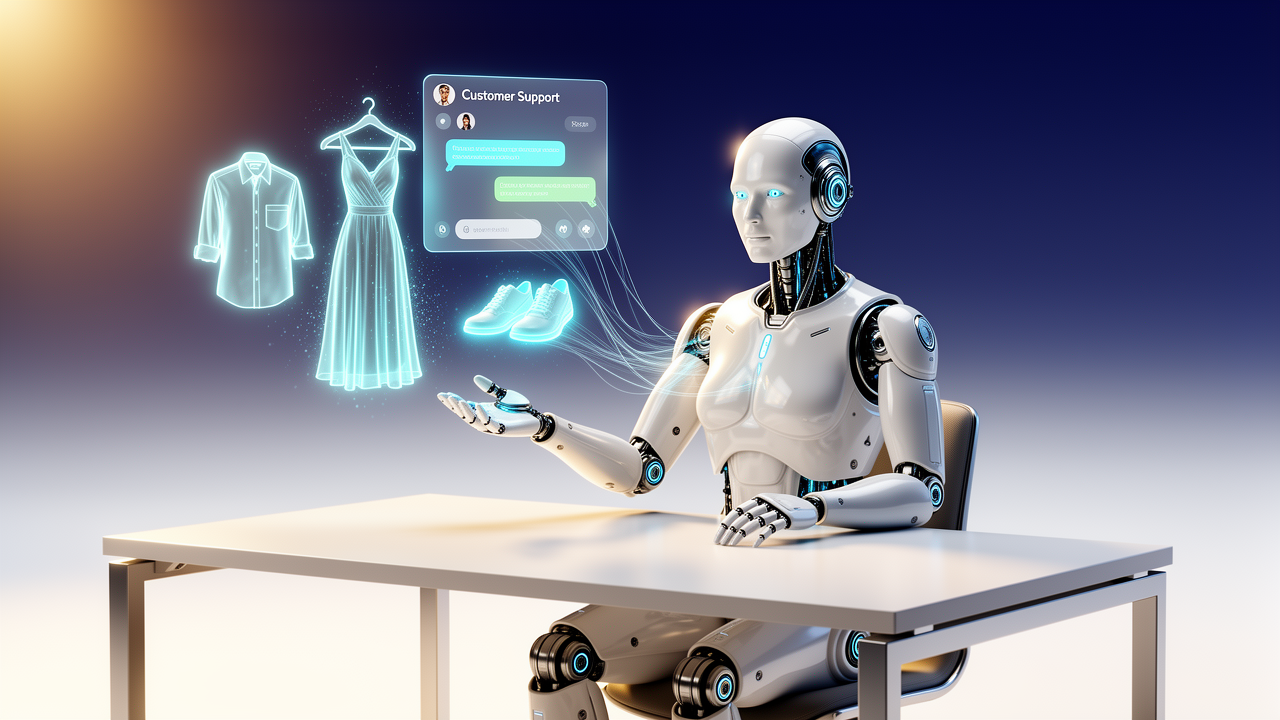
An ai agent for ecommerce is an autonomous software system that uses artificial intelligence to anticipate customer needs, personalize shopping experiences, and automate complex workflows across the entire customer journey—from browsing to purchase to post-sale support.
So there I was, staring at my laptop at 2 a.m., trying to figure out why our customer support queue had exploded to 847 unanswered messages. Classic online retail problem, right? Turns out, we weren’t the only ones drowning in “Where’s my order?” emails and “Does this come in blue?” inquiries.
That’s when I stumbled into the world of AI agents—not the clunky chatbots that make you wanna throw your phone across the room, but actual intelligent systems that can handle real conversations and make decisions. And honestly? It’s changed everything about how modern e-commerce operates.
The shift happening right now isn’t just about answering questions faster. It’s about fundamentally reimagining what an online store can be when it’s powered by something that actually thinks.
What Makes an AI Agent for Ecommerce Different from Regular Chatbots
Let’s pause for a sec and clarify what we’re actually talking about here. Traditional chatbots follow scripts—if customer says X, respond with Y. They’re glorified decision trees wearing a conversational mask.
AI agents? Totally different beast. These systems combine multiple layers of intelligence that work together like a well-oiled machine (or at least like a machine that’s had its morning coffee).
The Four Pillars That Define AI Agent for Ecommerce Systems
- Anticipatory intelligence: They predict what customers need before they even finish typing the question
- Personalization at scale: Every shopper gets a unique experience tailored to their browsing history, preferences, and behavior patterns
- End-to-end automation: They handle complete processes—from initial inquiry through purchase to returns—without handing off to a human
- Adaptive learning: Each interaction makes them smarter, refining their responses and recommendations continuously
If you’re still wrapping your head around what AI agents actually are at a foundational level, What Is an AI Agent? breaks down the core concepts in plain English.
Think of it this way: if traditional chatbots are like those automated phone systems that make you scream “REPRESENTATIVE!” into your phone, AI agents are like having a knowledgeable sales associate who actually remembers you and knows what you’re looking for.
Why AI Customer Support Ecommerce Is Exploding Right Now
Here’s the thing nobody tells you about running an online store: customer expectations have gone absolutely bananas. People want instant answers at 3 a.m. They want personalized recommendations that don’t suck. And they want the whole experience to feel effortless.
Hiring enough humans to meet these expectations? Financially impossible for most businesses. But AI agents can deliver that level of service without the astronomical payroll.
The Business Case That’s Driving Adoption
Scalability without the growing pains: Handle Black Friday traffic spikes with the same ease as a slow Tuesday afternoon. No panic hiring, no overtime costs, no burned-out support staff rage-quitting in the middle of the holiday rush.
Revenue protection and growth: Every unanswered question is potentially a lost sale. AI agents ensure that browsers get the information they need exactly when they need it, converting more visitors into buyers.
Operational efficiency that actually moves the needle: When AI handles the repetitive stuff—order tracking, return policies, size questions—human agents can focus on complex issues that require empathy and creative problem-solving.
The shift toward ai customer support ecommerce solutions isn’t just a tech trend. It’s a survival strategy for businesses competing in an environment where customer experience is the primary differentiator.
How AI Agents Actually Work Behind the Scenes
Okay, so how does this magic actually happen? Without getting into the weeds of neural networks and transformer models (because, honestly, my eyes glaze over too), here’s the simple version.
AI agents for e-commerce typically combine several technologies working in concert. Natural language processing lets them understand what customers are actually asking, even when it’s phrased weirdly. Machine learning models analyze past interactions to predict what information will be most helpful.
The Core Workflow of an E-Commerce AI Agent
- Detection: The agent identifies when a customer needs help (explicit question or behavioral signal like hovering over the FAQ link)
- Context gathering: It pulls together relevant information—browsing history, cart contents, past purchases, current page
- Intent analysis: Determines what the customer actually wants (product info, order status, help with a decision)
- Response generation: Crafts a personalized answer or recommendation based on all available context
- Action execution: If needed, completes tasks like updating orders, processing returns, or applying discounts
- Learning: Analyzes whether the interaction was successful and adjusts future responses accordingly
For Shopify store owners specifically, there are specialized implementations that integrate directly with your platform. Check out How AI Agents Handle Shopify Customer Questions Automatically for the nitty-gritty details on that integration.
What’s genuinely impressive (and maybe slightly unnerving?) is how these systems get better over time. They’re not static tools you set up and forget—they’re constantly evolving based on real interactions with your actual customers.
Common Myths That Are Holding Businesses Back
Let me bust some misconceptions I hear constantly, because they’re stopping businesses from exploring solutions that could genuinely help them.
Myth #1: AI Agents Will Make My Customer Experience Feel Cold and Robotic
This fear made sense five years ago when chatbots were terrible. Modern AI agents can maintain conversational tone, use appropriate humor, and even adapt their communication style to match the customer’s energy. Some platforms specifically emphasize empathic interactions that feel remarkably human.
The trick is implementation. A poorly configured AI agent will feel robotic. But a well-designed one? Customers often don’t realize they’re not talking to a person (and honestly, they don’t care as long as they get what they need).
Myth #2: This Technology Is Only for Big Enterprises with Massive Budgets
Nope. While enterprise solutions exist, there are accessible platforms designed specifically for small to mid-sized e-commerce businesses. The pricing models have evolved to include usage-based options that scale with your business rather than requiring massive upfront investment.
Starting small—maybe automating just FAQs and order tracking—lets you prove ROI before expanding to more complex use cases.
Myth #3: AI Agents Will Replace All My Customer Service Staff
Here’s the reality: AI agents handle the repetitive, high-volume stuff exceptionally well. They struggle with nuanced situations requiring judgment, empathy, or creative problem-solving. The most successful implementations use AI to handle routine inquiries, freeing humans to tackle complex issues where they add real value.
Think augmentation, not replacement. Your team becomes more effective, not obsolete.
Real-World Applications That Are Working Right Now
Let’s get practical. What are businesses actually doing with AI agents, and what results are they seeing?
Customer Support Automation That Actually Works
The most mature application focuses on ai customer support ecommerce scenarios. Some platforms specialize in automating the majority of customer support inquiries—handling FAQs, processing returns, managing order questions, and providing round-the-clock availability without staffing costs.
Common functions these systems handle effortlessly include size and fit questions, shipping timeline inquiries, return policy clarification, product availability checks, and discount code assistance. Basically all the stuff that makes up the bulk of your support queue but doesn’t require complex decision-making.
Personal Shopping Assistance at Scale
Remember when department stores had personal shoppers? AI agents are bringing that experience to online retail, but for every customer simultaneously. They act as shopping assistants that understand individual preferences, make context-aware product suggestions based on browsing behavior, and guide customers through decision-making for complex purchases.
This isn’t just “customers who bought X also bought Y” recommendations. It’s conversational guidance that feels like texting a friend who has great taste.
Backend Operations You Never See
Beyond customer-facing roles, AI agents manage the operational stuff that keeps e-commerce running smoothly. Inventory management that predicts stock needs and automates reordering. Sales conversion tools that specifically focus on turning browsers into buyers through strategic engagement. Call handling systems that ensure businesses never miss customer calls while identifying opportunities to drive additional sales.
One fascinating application involves high-consideration e-commerce—big-ticket items where customers need more hand-holding. AI agents can nurture these longer sales cycles without requiring constant human attention.
What to Look For When Evaluating Solutions
Okay, so you’re sold on the concept. How do you actually choose an ai agent for ecommerce platform that fits your needs? (And doesn’t turn into an expensive disappointment six months from now?)
Integration Capabilities
Does it play nicely with your existing tech stack? If you’re on Shopify, does it integrate natively? What about your CRM, email platform, or inventory management system? Siloed tools that don’t talk to each other create more problems than they solve.
Customization and Control
Can you train the agent on your specific products, brand voice, and policies? Some platforms offer extensive customization while others are more rigid. Consider how much your business needs a tailored experience versus a plug-and-play solution.
Analytics and Improvement Mechanisms
How will you know if it’s working? Look for platforms that provide clear metrics on automation rates, customer satisfaction, conversion impact, and ongoing learning. Dashboards that actually help you make decisions, not just pretty graphs that don’t tell you anything useful.
Escalation Pathways
What happens when the AI agent encounters something it can’t handle? Smooth handoff to human agents is critical. The system should recognize its limitations and transfer seamlessly rather than frustrating customers with circular conversations.
For context on how major platforms are approaching this space, Gartner’s research on AI agents provides valuable industry perspective.
Emerging Challenges and Considerations
I’d be doing you a disservice if I pretended this technology is all sunshine and unicorns. There are legitimate concerns that businesses need to think about as they implement these systems.
The Evaluation and Bias Question
How do we measure whether an AI agent is making good purchasing recommendations or support decisions? What biases might be embedded in agent behavior based on training data? These aren’t just philosophical questions—they have real business implications.
If your AI agent consistently steers certain customer segments toward lower-value products or provides less helpful service to specific groups, you’ve got both an ethical problem and a revenue problem.
Model Dependency and Stability
Most AI agents rely on underlying language models. What happens when those models get updated or changed? How do you ensure consistent performance when the foundation is evolving? This is particularly relevant as the AI landscape continues to shift rapidly.
The Changing Nature of Online Shopping
Traditional search-and-browse experiences may give way to agent-mediated shopping. Instead of scrolling through product pages, customers might just tell an AI agent what they need and trust its recommendations. This fundamentally changes the relationship between retailers, platforms, and consumers.
Are we prepared for a world where customers build loyalty to AI shopping agents rather than to specific retailers? What does product discovery look like when an AI agent is gatekeeping the entire experience?
Getting Started Without Losing Your Mind
If you’re ready to dip your toes into AI agents (or cannon-ball in, I won’t judge), here’s a practical roadmap that doesn’t require burning down your existing operation.
Start with a Clearly Defined Pain Point
Don’t try to automate everything at once. Identify your biggest bottleneck—maybe it’s order status inquiries eating up support time, or product questions preventing conversions. Focus on solving that specific problem first.
Pilot with a Contained Use Case
Test the technology with a specific product category, customer segment, or support channel before rolling it out broadly. This lets you learn what works, adjust configurations, and build confidence without risking your entire customer experience.
Measure What Actually Matters
Define success metrics before you launch. Are you trying to reduce support tickets? Increase conversion rates? Improve customer satisfaction scores? Track these metrics throughout implementation so you know whether it’s actually working.
Plan for the Human Element
Your support team isn’t gonna be thrilled about AI if they think it’s replacing them. Frame it as a tool that handles the boring stuff so they can focus on interesting, complex problems. Involve them in the implementation—they know where the pain points are better than anyone.
The Road Ahead for AI-Powered Commerce
We’re still in the early chapters of how ai agent for ecommerce technology will reshape online retail. The capabilities expanding right now—truly conversational commerce, predictive personalization, autonomous decision-making—would have seemed like science fiction just a few years ago.
The businesses that figure out how to implement these tools strategically (not just slapping AI onto everything because it’s trendy) will have significant competitive advantages. Better customer experiences. Lower operational costs. Higher conversion rates. It’s not magic, but the results can feel pretty magical when you watch it work.
That said, this isn’t about adopting technology for technology’s sake. It’s about solving real business problems and creating genuinely better experiences for customers who are tired of navigating terrible online shopping experiences.
The question isn’t whether AI agents will become standard in e-commerce—that ship has sailed. The question is how quickly your business can implement them thoughtfully, avoiding the pitfalls while capturing the genuine benefits.
And honestly? For once, the hype might actually be justified. Just don’t forget that even the smartest AI agent still needs smart humans making strategic decisions behind the scenes.
Frequently Asked Questions
What is an ai agent for ecommerce?
An ai agent for ecommerce is an autonomous AI system that handles customer interactions, personalizes shopping experiences, and automates workflows across the entire customer journey without requiring constant human oversight.
How do AI agents differ from traditional chatbots in online stores?
Unlike rule-based chatbots that follow scripts, AI agents use machine learning to understand context, anticipate needs, adapt responses, and continuously improve based on interactions.
Can small e-commerce businesses afford AI agent technology?
Yes—many platforms now offer scalable, usage-based pricing designed for small to mid-sized businesses, allowing you to start with limited automation and expand as you prove ROI.
Will AI agents replace human customer service teams?
AI agents handle repetitive, high-volume inquiries, but humans remain essential for complex situations requiring empathy, judgment, and creative problem-solving—the most effective approach combines both.
What are the main business benefits of implementing AI agents?
Key benefits include improved conversion rates, reduced support costs, consistent customer experiences, operational scalability during traffic spikes, and freed-up human resources for high-value tasks.